
Baidoa hunger risks remain severe
October analysis warns of severe hunger among displaced families in Baidoa and a conditional flood-related Famine risk in southern Somalia.
Reviewed 11 November 2026. Figures and milestones retain their source dates.
Latest timelineBaidoa hunger risks remain severe
FEWS NET's October outlook, based on information through 31 October, expects Emergency-level food insecurity in major displaced-person settlements, including Baidoa, with some households facing Catastrophe. It also identifies a conditional risk of Famine in southern Somalia if extreme, widespread flooding develops. A risk scenario is not a declaration that Famine has occurred in Baidoa.
The outlook projects national food assistance needs peaking at 6.0–6.99 million people between October and December. This is a Somalia-wide forecast, not a Baidoa population estimate. The earlier reports of rising child malnutrition remain important context but are not current clinic admission counts.
Food access, nutrition treatment and clean water must be considered together. Families who have lost livelihoods or been displaced repeatedly may struggle to recover even when food is available in markets.
What this means for affected communities
Food access, nutrition treatment and clean water must be considered together. Families who have lost livelihoods or been displaced repeatedly may struggle to recover even when food is available in markets.
Food and nutrition
Emergency food assistance, screening, therapeutic foods, medical treatment and continued follow-up are critical. Stock-outs or facility closures can leave severely malnourished children without timely care.
Water and sanitation
Reliable safe water, household containers, latrines and hygiene support are essential where families depend on costly trucked water or crowded communal points.
Health and disease
Malnutrition weakens resistance to disease. Measles, cholera, acute watery diarrhoea and other infections can become more dangerous when treatment, vaccination and surveillance are disrupted.
Protection and livelihoods
Displacement can expose women, children, older people and people with disabilities to heightened risks. Families also need ways to recover income, farming tools, livestock and other livelihood assets.
Developments and earlier reporting
Entries describe the situation reported on their dates. Earlier warnings and figures are historical context.
Food security outlook assesses severe needs
The October analysis describes acute food insecurity among displaced households and a conditional southern flood-related Famine risk.
FEWS NET · Reporting at that dateBaidoa treatment data show a steep rise
A stabilisation centre reports treating 400 children with severe acute malnutrition and complications in June, compared with 143 in January. The centre treated 1,405 children during the first half of 2026, 177% more than during the same period a year earlier.
Save the Children · Reporting at that dateFood assistance reaches drought-affected families in Baidoa
The Somali Disaster Management Agency reports delivering food assistance to vulnerable families in Baidoa as part of its response to the ongoing drought.
Somali Disaster Management Agency · Reporting at that dateServices receive renewed humanitarian support
Save the Children and Somali partners announce extended health, nutrition, water, sanitation, protection and education services across seven drought-affected districts, including Baidoa.
Save the Children · Reporting at that dateUpdated analysis identifies rapidly worsening hunger
The IPC projection for April–June places six million people in Crisis-level hunger or worse, including 1.9 million in Emergency. Burhakaba district in Bay Region faces a risk of famine under a plausible worst-case scenario.
Sources: IPC, Somalia's government and United Nations agencies · Reporting at that dateEvidence that will shape the next update
What changes next
Rainfall and flooding, market access, nutrition services and updated IPC-compatible analysis. Household Catastrophe classifications and an area-level Famine declaration are different findings.
Who may be missed
Recovery and assistance figures can hide differences between neighbourhoods and households. Local assessments should include people with disabilities, older people, children and those who have lost income or secure accommodation.
What the figures mean
Affected, displaced, assisted and recovered describe different things. Dates, geographic coverage and definitions are retained so readers can judge what each figure establishes.
Where to check current advice
Use the responsible local authorities and humanitarian organisations for current warnings and assistance rules. The timeline records earlier reporting and is not a live alert service.
Information used in this report
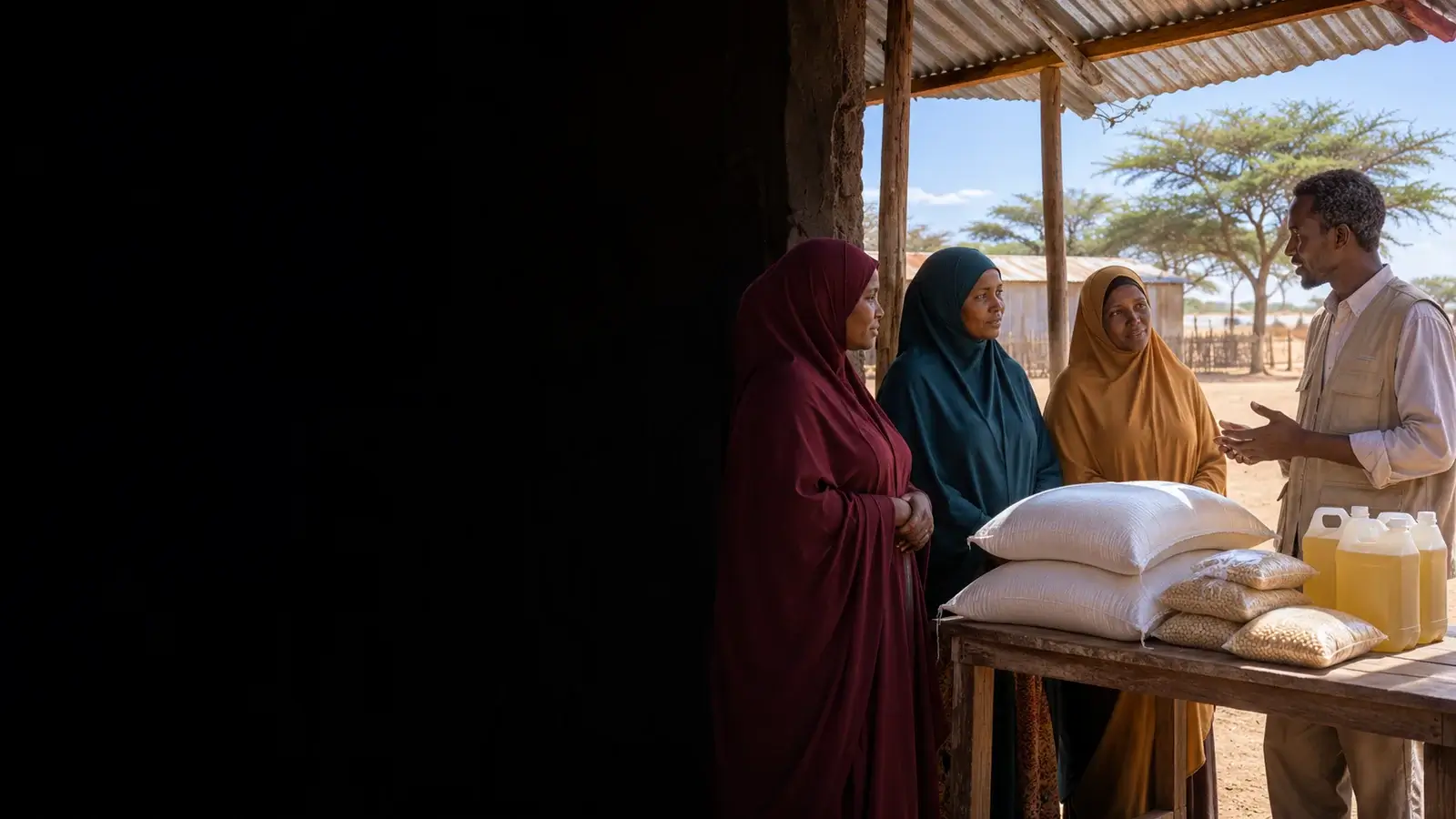
Visual note: the supporting artwork is a conceptual scene, not a photograph documenting this event.
FEWS NET — October 2026 outlook; information cutoff 31 October; Save the Children — Earlier Baidoa child malnutrition and treatment reporting. Earlier timeline entries retain their original source attributions.
Publication and updates
- Published : Original report published.
- Updated : Material report update.