
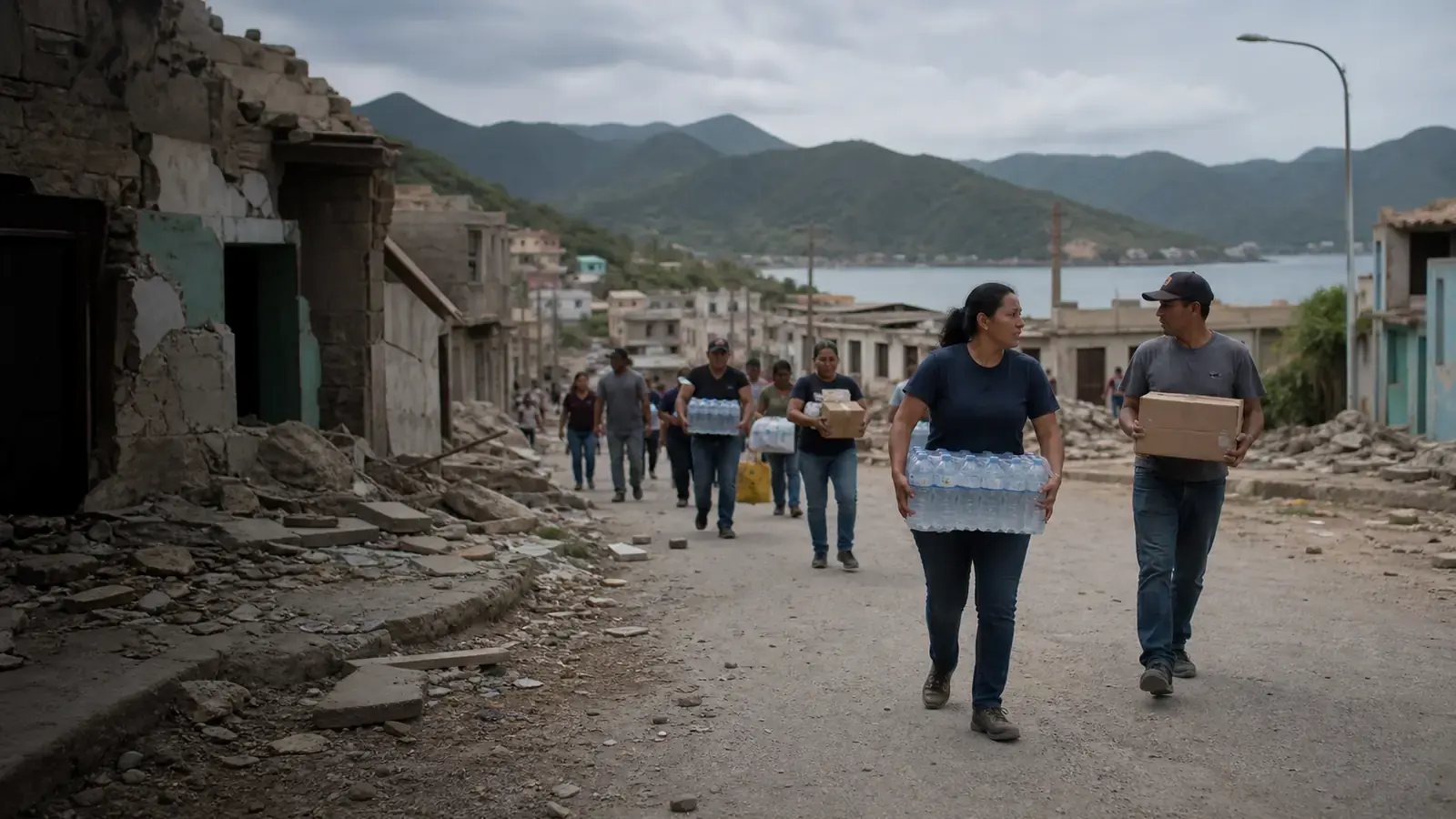
Venezuela earthquake recovery continues after reported death toll passes 6,000
Recovery operations continued after powerful earthquakes struck northern Venezuela, with more than 6,000 deaths reported and urgent shelter, health and water needs.
Health, shelter, water and psychosocial needs remain urgent as recovery operations continue.
Latest updatesThe reported death toll passes 6,000 as communities confront widespread damage
Back-to-back magnitude 7.2 and 7.5 earthquakes struck near Venezuela's populated northern coast on 24 June, causing severe damage in La Guaira, Greater Caracas and other affected communities.
By late July, more than 5,000 people had been reported killed, more than 16,000 injured and tens of thousands of buildings damaged or destroyed. Credible reporting on 4 August said the reported death toll had passed 6,000 as recovery operations continued.
The Disasters Emergency Committee reported that 680,000 children needed humanitarian support, more than 16,700 people had been injured and about 96,000 buildings were damaged or destroyed.
The World Bank estimated direct physical damage at 19.5 billion US dollars. That estimate covered damage to housing, infrastructure and public services, but not every longer-term social and economic loss.
The International Federation of Red Cross and Red Crescent Societies launched a 50 million Swiss franc emergency appeal to support 300,000 people with health, water, shelter, protection and psychosocial assistance.
Families face a long recovery across housing, health and essential services
The scale of physical damage is placing sustained pressure on households, hospitals, water systems and local recovery capacity.
Shelter
People whose homes were destroyed or made unsafe need temporary accommodation, essential household items and support to rebuild.
Health care
Hospitals and clinics face high demand from injured people while maintaining care for patients with other urgent needs.
Water and sanitation
Damage to water systems increases the need for safe drinking water, sanitation, hygiene supplies and repairs.
Psychosocial support
Bereavement, repeated aftershocks, displacement and the loss of homes can create lasting mental-health and protection needs.
How the emergency has developed
Reported death toll passes 6,000
Credible reporting says the death toll has crossed 6,000 as health, shelter, water and psychosocial needs continue.
Response moves into recovery
The Red Cross reports continuing work in affected communities one month after the earthquakes, with health care, safe water and psychosocial support still urgent.
Direct physical damage estimated at 19.5 billion US dollars
The World Bank publishes an estimate covering widespread losses to homes, infrastructure and public services.
Hundreds of thousands of children need support
The Disasters Emergency Committee reports 680,000 children needing humanitarian help, more than 16,700 people injured and about 96,000 buildings affected.
IFRC launches emergency appeal
The International Federation seeks 50 million Swiss francs to support 300,000 people with relief, protection and recovery assistance.
Powerful earthquakes strike northern Venezuela
A magnitude 7.2 earthquake is followed seconds later by a magnitude 7.5 earthquake, causing severe damage across populated northern areas.
Recovery will require sustained services and safer rebuilding
Long-term needs will depend on housing assessments, restoration of essential systems and support for families who lost relatives, homes and income.
Temporary shelter
Safe accommodation remains essential while damaged buildings are assessed and reconstruction plans develop.
Restoring services
Health, water, power, communications and transport systems need repairs and temporary support.
Supporting children
Children need access to safe spaces, health care, education and protection as families recover.
Transparent assessments
Casualty and damage figures should remain dated as authorities and humanitarian organisations reconcile records.
Information used in this report
International Federation of Red Cross and Red Crescent Societies; Disasters Emergency Committee; International Organization for Migration; United Nations Development Programme; World Bank; and credible reporting.