
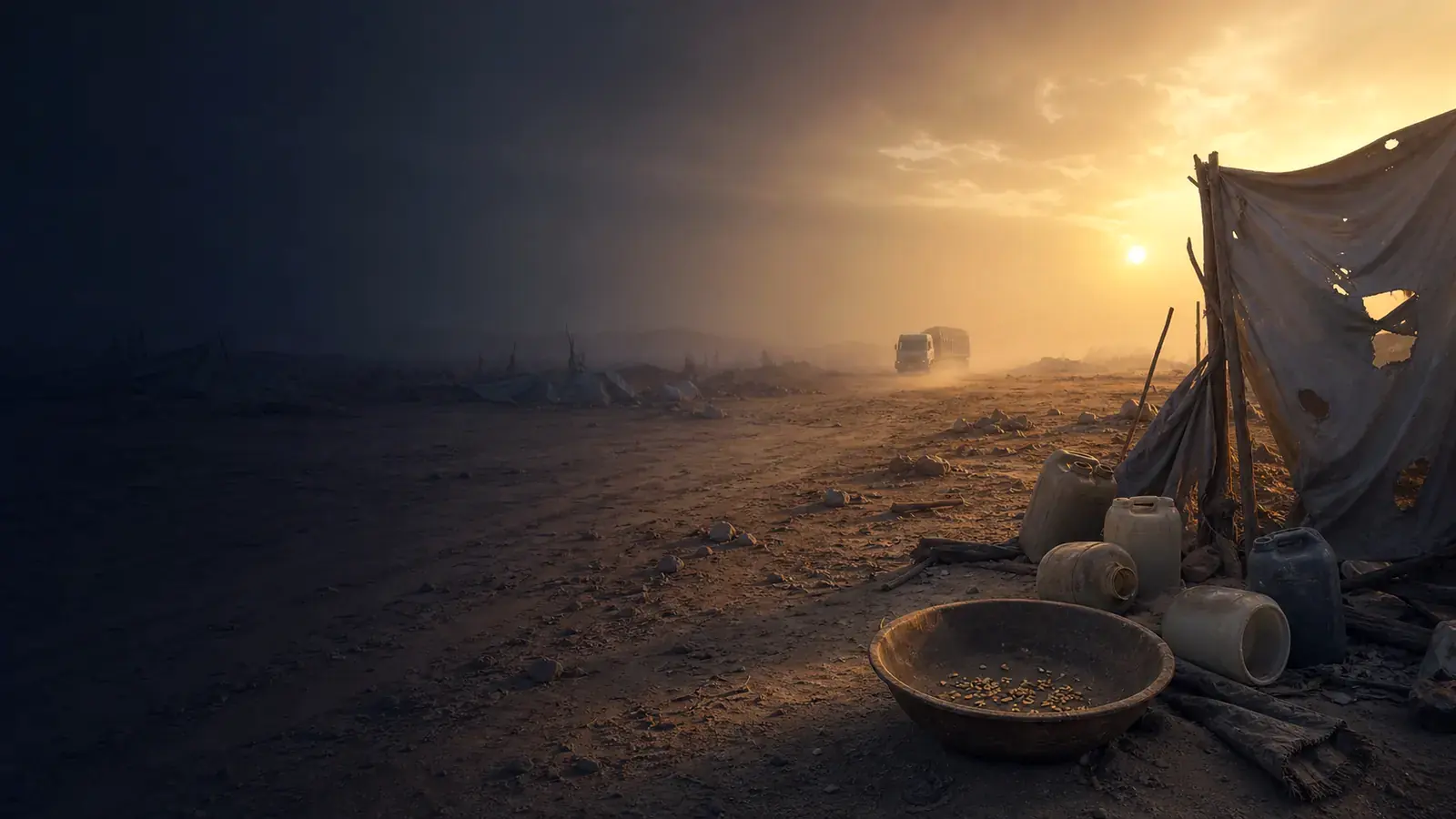
El Obeid hunger crisis deepens as displacement camps exceed capacity
Nearly 400,000 people across Sheikan, Bara and Gharb Bara faced emergency hunger as displaced families arrived in El Obeid and food stocks neared depletion.
Displacement is increasing pressure on scarce food, water and shelter while funding and access limit assistance.
Latest updatesEmergency hunger deepens as more displaced families reach El Obeid
Nearly 400,000 people across Sheikan, Bara and Gharb Bara districts were experiencing Emergency levels of acute food insecurity, classified as IPC Phase 4, according to the World Food Programme on 17 July.
El Obeid was hosting hundreds of thousands of displaced people as families arrived from Kordofan and other parts of Sudan. Camps were reported beyond capacity, while food, fuel and water supplies remained scarce.
The World Food Programme was assisting just over 100,000 people in the city, but severe funding pressure meant recipients received half rations. The agency warned that specialised nutrition food could begin running out in August.
UN Women estimated that El Obeid held about 500,000 civilians, including 83,000 internally displaced people. Women and girls faced additional protection risks when travelling to collect scarce water.
Satellite analysis reported by BBC Verify showed the main displacement camp expanding between March and July. A humanitarian official estimated that 80 to 100 households were still arriving each day, although this was not a new United Nations displacement count.
Families face hunger, unsafe water and repeated displacement
Conflict, interrupted markets and overcrowded displacement sites are combining with serious funding gaps and barriers to humanitarian access.
Food and nutrition
Half rations and threatened nutrition stocks leave children, pregnant women and other vulnerable people at greater risk.
Water and protection
Scarce water forces longer journeys and increases protection risks, especially for women and girls travelling outside crowded sites.
Health care
El Obeid Teaching Hospital had treated more than 850 weapon-wounded patients since the start of 2026, adding pressure to essential services.
Humanitarian access
Active conflict prevented life-saving food assistance from reaching an estimated 200,000 people across Sudan during June.
How the emergency has developed
Satellite analysis shows displacement camp expansion
BBC Verify reports hundreds of tents appearing between 24 March and 19 July. A humanitarian official estimates 80 to 100 households still arriving each day.
Women and girls face danger while collecting water
UN Women describes attacks near water sources and estimates about 500,000 civilians in El Obeid, including 83,000 internally displaced people.
Nearly 400,000 people face emergency hunger
The World Food Programme reports IPC Phase 4 acute food insecurity across Sheikan, Bara and Gharb Bara and says aid recipients in El Obeid receive half rations.
More than 5,500 children are newly displaced
Save the Children says 11,000 people were displaced around El Obeid during the previous two weeks, including more than 5,500 children.
More than 42,000 people receive one month of food
International Committee of the Red Cross and Sudan Red Crescent teams distribute food in El Obeid while the teaching hospital treats weapon-wounded patients.
Sudan-wide hunger reaches extreme levels
The Integrated Food Security Phase Classification estimates nearly 19.5 million people in analysed areas face Crisis hunger or worse. Famine-risk areas identified in that analysis are outside North Kordofan.
Food stocks, funding and access will determine how much aid reaches families
The next phase depends on safe humanitarian access, replenished nutrition supplies and sustained support for displaced people and host communities.
Maintaining food assistance
Agencies need funding and reliable supply routes to prevent further ration cuts and depleted food stocks.
Protecting water access
Safer water points and reliable supply are essential to reduce both health and protection risks.
Supporting new arrivals
Overcrowded sites require shelter, sanitation, registration and protection capacity as families continue arriving.
Updating the evidence
Dated assessments are needed to distinguish verified local conditions from broader Sudan-wide projections.
Information used in this report
World Food Programme; International Committee of the Red Cross; Sudan Red Crescent; UNICEF; BBC Verify; United Nations Geneva; UN Women; UNFPA; Save the Children; and the Integrated Food Security Phase Classification.