
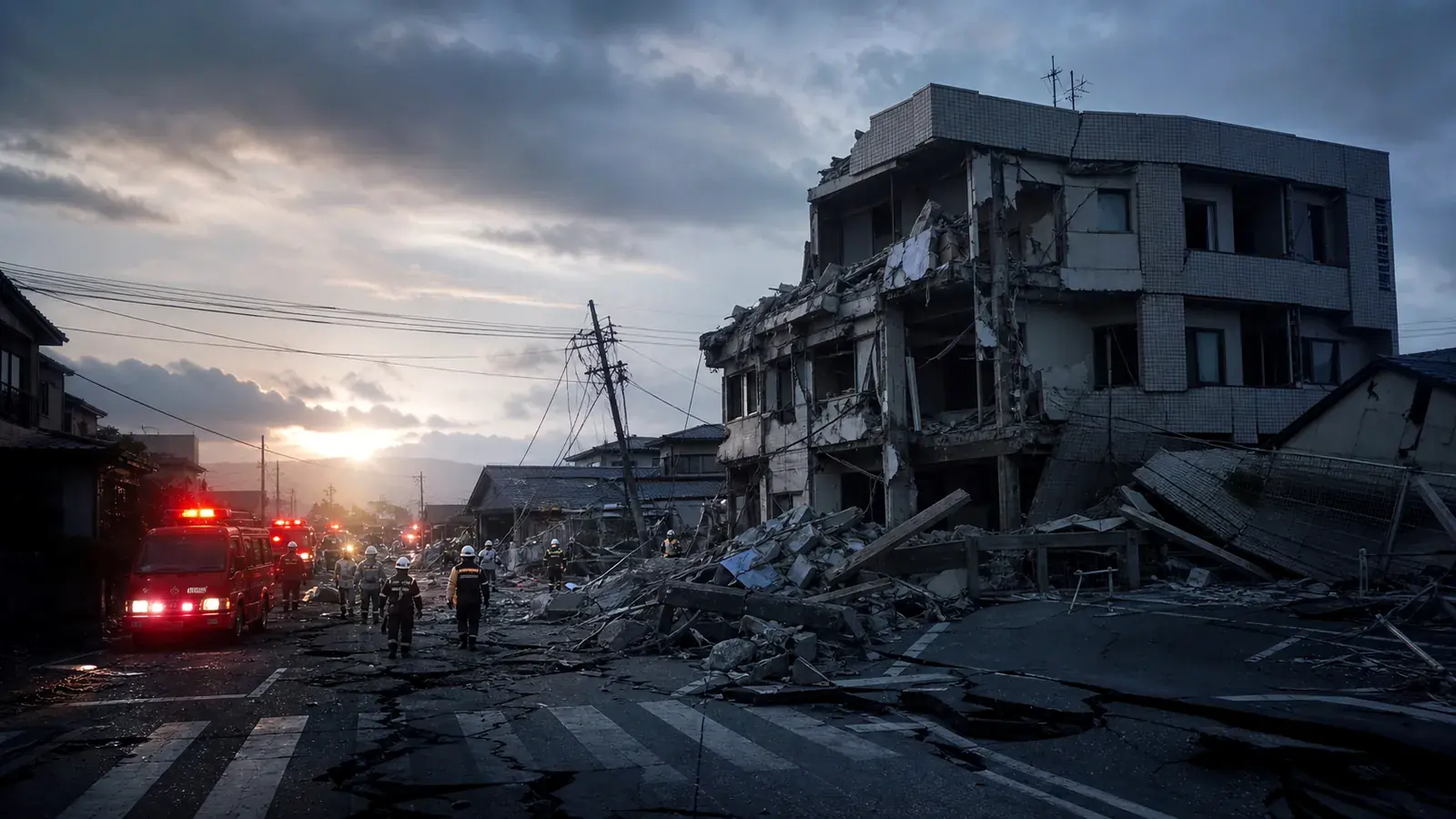
Kumamoto earthquake damages 11,232 homes as recovery continues
Japan's official 12 August assessment recorded 39 deaths, 353 injuries and 11,232 damaged homes in Kumamoto Prefecture, with evacuation instructions still covering 219,027 people.
Housing assessments and evacuation instructions continue after the 28 July earthquake and subsequent aftershocks.
Crisis timelineOfficial assessment records widespread housing damage
Japan's Fire and Disaster Management Agency reported at 13:00 JST on 12 August that 39 people had died and 353 had been injured in Kumamoto Prefecture following the magnitude 7.1 earthquake.
Officials recorded 11,232 damaged homes in Kumamoto, including 1,252 destroyed, 1,046 half-destroyed and 8,934 partially damaged. Across all listed prefectures, the agency recorded 357 injured people and 11,240 damaged homes.
Evacuation instructions continued to cover 103,922 households and 219,027 people in Kumamoto Prefecture. All 11 reported fires had been extinguished and all 64 reported rescue incidents had been addressed.
Aftershocks, unsafe housing and disruption to normal services continue to shape recovery even as the immediate rescue phase closes.
Unsafe homes and continuing aftershocks prolong displacement
The scale of housing damage creates needs for temporary accommodation, essential supplies, health care and support through a long rebuilding process.
Shelter
Families whose homes are destroyed or unsafe need temporary accommodation and clear information about inspections and return.
Health care
Injured people and residents with ongoing medical needs require uninterrupted access to care while services recover.
Aftershock safety
Further shaking can worsen damaged structures, requiring continued caution and public preparedness.
Recovery
Repairing homes, roads and local services will take time, particularly where damage assessments continue to change.
How the Kumamoto earthquake response developed
Damage assessment reaches 11,232 homes
The Fire and Disaster Management Agency records 39 deaths, 353 injured people and 11,232 damaged homes in Kumamoto Prefecture. Across all listed prefectures, it records 357 injuries and 11,240 damaged homes.
Damage assessment reaches 10,781 homes
The Fire and Disaster Management Agency records 39 deaths, 353 injured people and 10,781 damaged homes in Kumamoto Prefecture. Across all listed prefectures, it records 357 injuries and 10,789 damaged homes.
Damage assessment reaches 9,620 homes
The Fire and Disaster Management Agency reports 39 deaths, 172 injured people and 9,620 damaged homes in Kumamoto Prefecture.
Official assessment reaches 8,907 damaged homes
The agency reports 39 deaths, 166 injuries and evacuation instructions covering 219,027 people in Kumamoto.
Housing losses continue to rise
Officials record 38 deaths, 114 injured people and 2,197 damaged homes as assessments reach more communities.
Strong aftershock strikes the Kumamoto region
The Japan Meteorological Agency records a magnitude 4.7 earthquake reaching seismic intensity 5-lower in Uki City, with no tsunami risk.
Emergency relief assessments begin
Japan Platform begins an emergency response and field needs assessment as national and local authorities continue rescue and damage checks.
Magnitude 7.1 earthquake strikes Kyushu
The earthquake causes severe shaking, building damage, fires and rescue operations across affected areas.
Housing inspections will determine how quickly families can return
Authorities will continue reconciling damage reports, monitoring aftershocks and supporting households that cannot safely return home.
Complete assessments
Municipal and prefectural teams will continue checking homes, roads and public facilities.
Maintain evacuation support
Residents covered by instructions need reliable shelter, supplies and local information.
Monitor aftershocks
Japan Meteorological Agency updates will guide safety advice as the sequence continues.
Plan reconstruction
Long-term recovery will depend on safe repairs, household support and restoration of local services.
Information used in this report
Fire and Disaster Management Agency; Japan Meteorological Agency; Kumamoto Prefecture; Japan Ministry of Defense; Kumamoto Red Cross Hospital; and Japan Platform.