
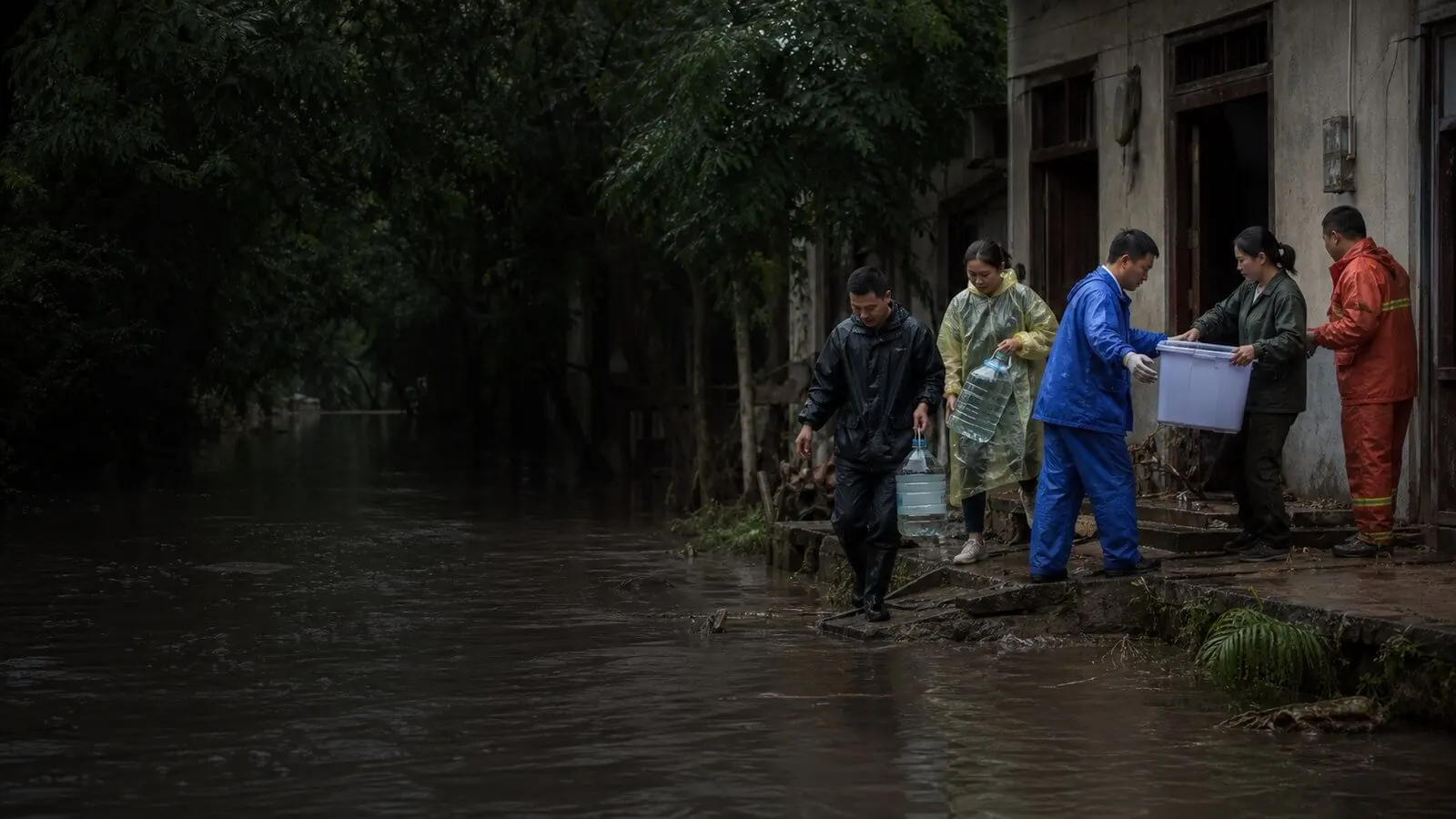
Typhoon Maysak floods kill 159 in southern China
Authorities say 159 people died, 10 remain missing and more than 1.65 million were affected in Nanning and Guigang after severe flooding in Guangxi.
Authorities are rebuilding after severe July flooding while the reported casualty and missing-person totals remain subject to further official review.
Latest timelineA delayed official balance records 159 deaths across Nanning and Guigang
Authorities in Guangxi, southern China, say 159 people died and 10 remain missing after Typhoon Maysak brought historic rainfall and severe flooding to Nanning and Guigang in early July.
The figures announced on 21 August cover more than 1.65 million affected people across 16 county-level areas in the two prefecture-level cities. They represent a sharp increase from the 39 deaths and nine missing people reported on 9 July after local police and officials carried out household checks, cross-verification and other reviews.
In Nanning, authorities reported 136 deaths and 10 people missing. Guigang reported 23 deaths. At least 107 of the deaths were linked to floods released by reservoir breaches, according to the latest accounts citing local authorities.
More than 320,000 people were evacuated or relocated during the emergency. Earlier national updates described record rainfall, flooded settlements, damaged water supplies, transport disruption and reservoirs overtopping or developing breaches across Guangxi.
Both Nanning and Guigang have moved into recovery and reconstruction. The immediate rescue phase has ended, but families face continuing needs linked to damaged homes, water and sanitation, healthcare, livelihoods, public infrastructure and safer long-term flood protection.
Recovery must address housing, water systems and disrupted livelihoods
The floods affected dense urban areas, towns and rural communities across a wide part of Guangxi, leaving uneven needs that will persist beyond the end of emergency evacuations.
Safe housing
Families whose homes were flooded or structurally damaged need safe temporary accommodation, repair support and clear guidance on when buildings can be occupied again.
Water and public health
Flooded water infrastructure, wells and sanitation systems require inspection, repair and monitoring. Clean water, hygiene supplies and disease surveillance remain important during recovery.
Livelihood recovery
Flooding damaged farms, livestock operations, shops and local transport. Households may need sustained help to replace tools, restart income and recover from lost crops or stock.
Reservoir and infrastructure safety
Authorities face extensive work to assess breached or overtopped reservoirs, restore roads and utilities, and strengthen warning and flood-control systems before future heavy rain.
How the disaster and official response developed
Authorities announce a substantially higher toll
Nanning and Guigang report 159 deaths, 10 missing people and more than 1.65 million people affected. Both cities say recovery and reconstruction are now the main focus.
National July disaster review confirms exceptional losses
China's Ministry of Emergency Management says Typhoon Maysak caused historically rare and persistent rainfall in Guangxi, with major casualties, reservoir incidents and extensive damage still under assessment.
Agricultural recovery support expands
National authorities send disinfectants, protective equipment and technical teams to help drain farmland, manage animal-health risks and restore agricultural production.
National disaster response is raised
A Level III national disaster response is activated for Nanning and Guigang. Authorities then report 39 deaths and nine missing people while resettlement and recovery work begins.
Relief supplies reach Guangxi
Authorities report 375,000 people affected and 130,000 evacuated at that stage, while more boats, food, lighting, rain gear and other emergency items are allocated.
Typhoon Maysak reaches southern China
The storm makes landfall in Hainan and moves toward the Beibu Gulf, bringing prolonged rainfall that later causes severe flooding across Guangxi.
Missing-person checks, reservoir reviews and household recovery remain central
The latest figures are official but may still change as remaining cases and infrastructure losses are reviewed.
Final casualty reconciliation
Authorities may revise the missing-person and death totals as identification, household and public-security records are completed.
Reservoir investigations
Public reporting on the condition, failure sequence and rehabilitation of damaged reservoirs will shape future safety work and community confidence.
Uneven household recovery
Headline reconstruction projects can move faster than assistance for renters, low-income households, older people and families whose livelihoods were destroyed.
Future rain risk
Continued wet-season hazards could affect unstable slopes, damaged roads and temporary repairs, making warning systems and safe evacuation routes especially important.
Information used in this report
China's Ministry of Emergency Management, National Meteorological Center, Guangxi Zhuang Autonomous Region authorities and local recovery meetings in Nanning and Guigang; Reuters; and the South China Morning Post.
Publication and updates
- Published — Original report published.