
Conakry landfill collapse kills at least 31
At least 31 people died, 22 were injured and more than 350 are in temporary shelter after a landfill collapse in Conakry, Guinea.
Searches, household checks and evacuations continue. Casualty and displacement figures remain provisional.
Latest timelineHundreds shelter in a school after homes were engulfed at Dar-es-Salam
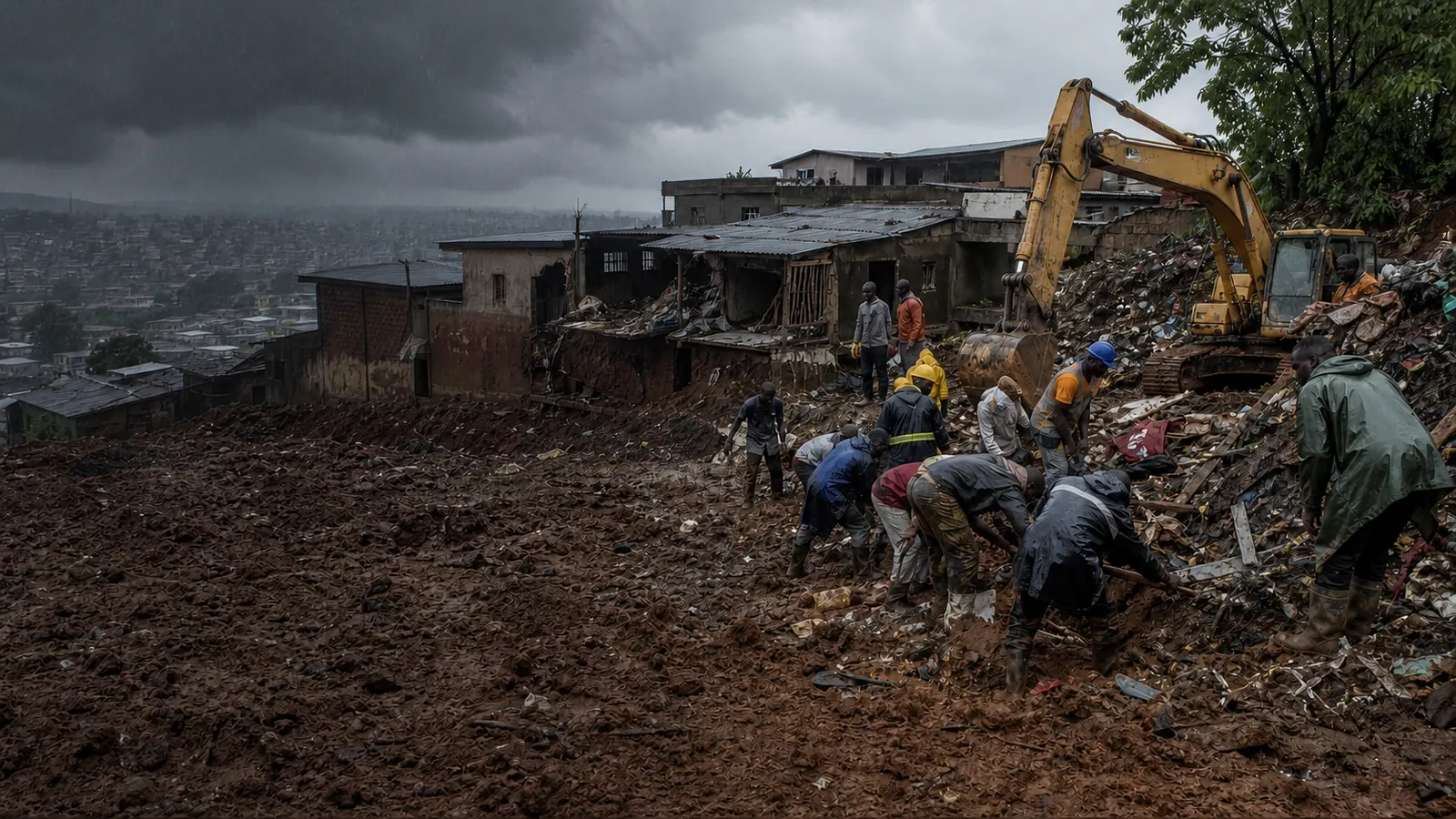
At least 31 people have died and 22 were injured after part of the Dar-es-Salam landfill collapsed onto homes in Gbéssia commune, Conakry, Guinea, following intense overnight rain.
The collapse happened at about 02:00 local time on 23 August. Guinea's government initially reported 30 deaths, six serious injuries and 16 minor injuries. The National Agency for the Management of Humanitarian Emergencies and Disasters later put the death toll at 31.
Emergency teams moved 358 affected and at-risk people into Dixinn Centre 1 primary school. Officials identified 72 exposed households and said the number receiving assistance could rise towards 400 as family records are checked.
State services, the Guinea Red Cross, defence and security forces, medical teams, local authorities and residents have supported search, recovery and evacuation work. A mobile clinic, food, clothing, healthcare and psychosocial support are being organised at the temporary shelter.
Rescue work is continuing in unstable terrain. The latest figures should be treated as provisional while searches, identification and household registration continue.
Safe shelter, healthcare and protection are immediate priorities
Families directly affected by the collapse and neighbours evacuated from exposed ground need support while authorities assess whether and when the area can be made safe.
Safe accommodation
A primary school is serving as an emergency shelter. Families need adequate sleeping space, lighting, privacy, security and a clear plan for longer-term housing.
Health and psychosocial care
Injured people require treatment and referral, while bereaved families, survivors and responders may need sustained mental-health and psychosocial support.
Water and sanitation
Temporary accommodation needs reliable drinking water, toilets, washing facilities, waste management and infection-prevention measures, especially during continued rain.
Protection and information
Accurate family registration, missing-person information and clear safety advice are essential for reunification, fair assistance and preventing returns to unstable ground.
How the collapse and response developed
Emergency shelter and mobile health support expand
ANGUCH reports 358 people housed at Dixinn Centre 1 primary school, with food, healthcare and psychosocial support being organised. Officials expect registration to identify additional people needing assistance.
Government issues a provisional national balance
The government reports 30 deaths, six serious injuries and 16 minor injuries, and says search and recovery operations are continuing with the Red Cross, medical teams and security services.
Landfill mass collapses onto nearby homes
After intense overnight rain, part of the Dar-es-Salam landfill gives way in Gbéssia commune and engulfs homes and shelters beside the site.
Authorities discuss closing the dangerous site
Officials visit the landfill and publicly address plans to close and relocate waste from the site amid longstanding safety concerns.
Search results, shelter conditions and relocation plans may change the picture
Authorities have not yet issued a final casualty, missing-person or housing-loss assessment.
Casualty reconciliation
Searches and identification may change the death and injury totals. New figures should be compared with the time and agency attached to each report.
Household registration
The shelter population may rise as officials verify relatives who were away when the collapse happened and residents evacuated from continuing danger.
Longer-term relocation
Families need clarity on safe alternatives, tenure and livelihood access before temporary school accommodation can end without exposing them to new risks.
Further rain and slope safety
Continuing wet weather could complicate searches and destabilise waste, soil and damaged structures around the collapse zone.
Information used in this report
Government of Guinea; National Agency for the Management of Humanitarian Emergencies and Disasters; Guinea Red Cross; Reuters; and Africa Guinée.
Publication and updates
- Published — Original report published.