
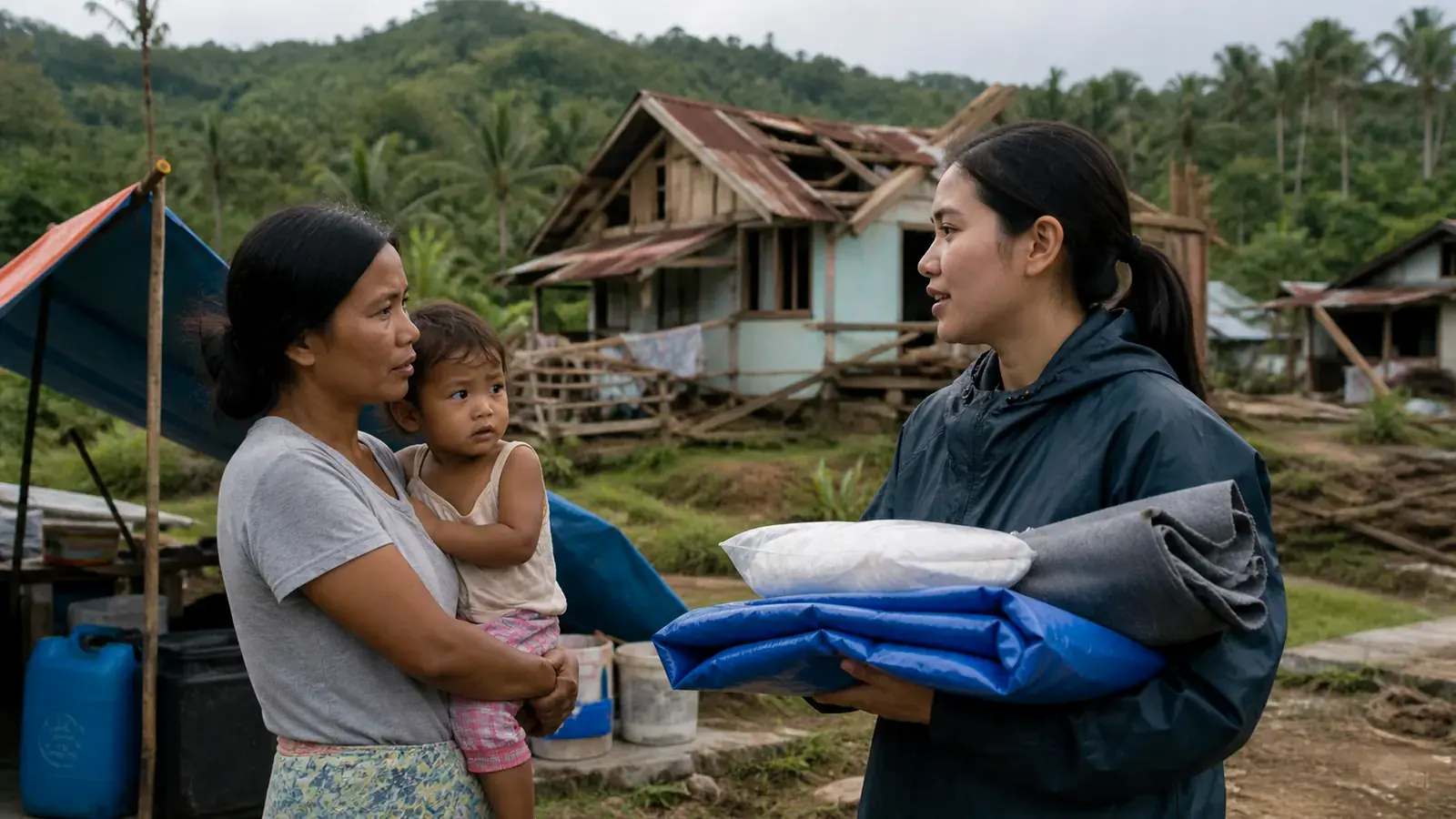
More than 92,000 people remain displaced after Mindanao earthquake
Government data recorded more than 1.65 million people affected and 92,628 still displaced one month after the magnitude 7.8 offshore Sarangani earthquake.
Displacement and housing damage remain severe as communities work through a long recovery.
Latest updatesMore than 92,000 people were still displaced one month after the earthquake
A magnitude 7.8 earthquake struck offshore Sarangani at 07:37 Philippine Standard Time on 8 June. The earthquake affected communities across Mindanao and triggered an initial tsunami warning.
Department of Social Welfare and Development data recorded 1,655,313 people affected across 650 barangays by 8 July. The same report listed 92,628 people still displaced, including 28,462 people in 74 evacuation centres and 64,166 staying elsewhere.
Government records listed 121,307 damaged homes. Of those, 19,188 were destroyed and 102,119 were partially damaged, leaving families with continuing shelter, protection and recovery needs.
The United Nations in the Philippines reported 81 deaths, more than 1,300 injuries and 31 people missing as of 30 June. Agencies were delivering food, medical care and other assistance while aftershocks and secondary hazards complicated recovery.
Displaced families face prolonged shelter and protection needs
Damage to housing and essential services has extended the emergency beyond the first weeks of search, rescue and evacuation.
Shelter
Families whose homes were destroyed or remain unsafe need temporary accommodation, repairs and essential household items.
Health care
Injured people and residents with continuing health needs require accessible services while facilities and transport routes recover.
Water and sanitation
Displaced communities need safe drinking water, sanitation and hygiene support in evacuation centres and temporary settlements.
Secondary hazards
Landslides, liquefaction, aftershocks and damaged buildings continue to shape decisions about safe return and rebuilding.
How the emergency has developed
More than 92,000 people remain displaced
Department of Social Welfare and Development Report 56 records 1,655,313 people affected, 92,628 people displaced and 121,307 damaged homes.
United Nations response reaches affected areas
The United Nations in the Philippines reports 81 deaths, more than 1,300 injuries, 31 people missing and around 90,000 people displaced as of 30 June.
Assessments identify continuing hazards
DOST-PHIVOLCS field teams assess earthquake impacts and warn that landslides, liquefaction and damaged buildings could create further risks.
Magnitude 7.8 earthquake strikes offshore Sarangani
DOST-PHIVOLCS records the earthquake about 32 kilometres west of Maasim at a depth of 33 kilometres. Emergency operations begin across affected parts of Mindanao.
Recovery depends on safe rebuilding and sustained support
Displacement figures will change as families return, but destroyed homes and disrupted livelihoods will require longer-term assistance.
Safe return
Structural inspections and local hazard information will help determine when residents can return without unacceptable risk.
Housing recovery
Families need support to repair partially damaged homes and rebuild where structures were destroyed.
Essential services
Health, water, sanitation, education and transport services need continued repair and support.
Reliable information
Dated official updates remain important as aftershocks, displacement and recovery needs change.
Information used in this report
Department of Social Welfare and Development DROMIC; DOST-PHIVOLCS; United Nations in the Philippines; UNHCR Philippines; and the AHA Centre.