
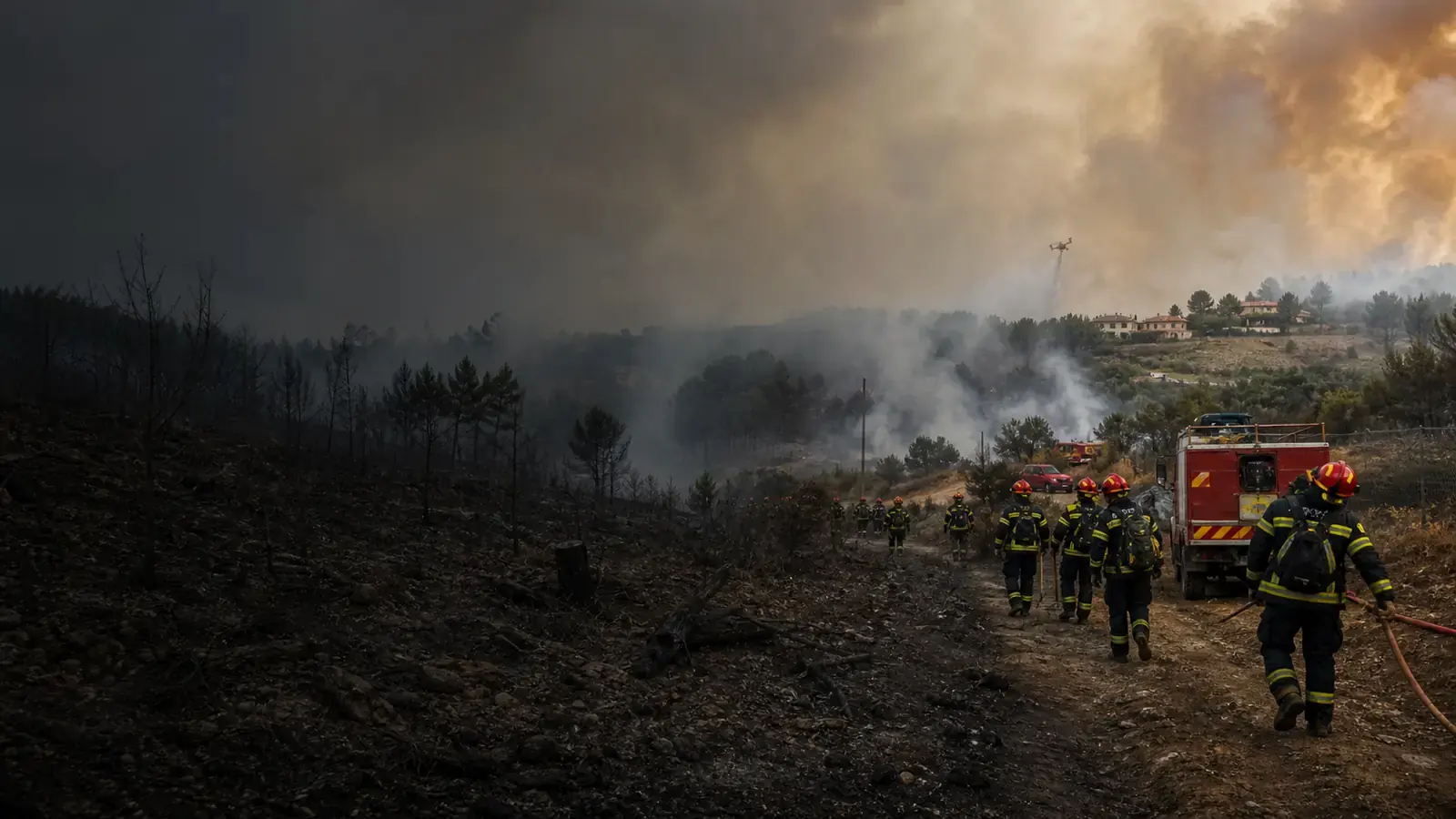
Southwest France wildfires forced 224,000 evacuations as recovery begins
About 42,000 hectares burned during ten days of wildfires across southwest France, forcing 224,000 evacuations before recovery work began.
Active fire conditions eased, but smouldering woodland, destroyed homes and community recovery needs remain.
Latest updatesCommunities begin recovery after ten days of destructive fires
Wildfires across southwest France forced an estimated 224,000 evacuations during ten days of intense fire activity. About 42,000 hectares burned, thousands of people remained unable to return by 2 August and around 3,000 firefighters were involved in the response.
Credible reporting recorded roughly 150 homes destroyed in Le Porge. Earlier French Red Cross information said more than 30,000 people had already been evacuated by 24 July and about 100 homes had been destroyed at that stage of the emergency.
Fire activity eased in parts of Gironde by the end of July, but crews and public authorities continued monitoring hot spots and residual risks. On 5 August, Le Monde reported that woodland was still smouldering as communities and forest owners began assessing the recovery ahead.
The French Red Cross deployed about 300 volunteers and supplied emergency beds, hygiene kits, masks and blankets while supporting accommodation, ambulance services and evacuation assistance.
Safe return and recovery needs continue after mass evacuation
Even where flames were controlled, residents faced damaged housing, interrupted services, smoke exposure and uncertainty about returning safely.
Shelter and return
People unable to return need safe temporary accommodation and clear local information about hazards around homes and roads.
Health and protection
Smoke, extreme heat, evacuation stress and the needs of older or medically vulnerable residents require continued attention.
Destroyed homes
Families whose homes were lost face a longer period of temporary housing, insurance claims, rebuilding and replacement of essential belongings.
Forest recovery
Smouldering ground and damaged woodland can remain dangerous after visible flames subside, requiring monitoring and controlled access.
How the emergency has developed
Recovery begins while woodland still smoulders
Le Monde reports that parts of the Gironde forest remain hot and smouldering as communities begin confronting rebuilding and longer-term recovery.
Thousands remain unable to return
Credible reporting records 224,000 evacuations, about 42,000 hectares burned, roughly 3,000 firefighters involved and around 150 homes destroyed in Le Porge.
Hot spots decline as monitoring continues
Le Monde reports easing activity in Gironde while crews and authorities continue watching hot spots and residual danger.
French Red Cross expands relief support
About 300 volunteers support affected communities with emergency beds, hygiene supplies, protective masks, blankets and evacuation assistance.
European aircraft support the response
The French Presidency reports European firefighting aircraft supporting national operations as the Biscarrosse fire reaches 3,600 hectares.
Emergency accommodation and evacuation support scale up
The French Red Cross reports more than 30,000 people evacuated and about 100 homes destroyed as volunteers provide shelter and essential supplies.
Recovery will require safe access, housing support and continued monitoring
The extent of longer-term housing, environmental and livelihood losses will become clearer as residents return and detailed assessments continue.
Residual fire risk
Crews will continue checking hot spots and responding quickly if heat and wind reactivate fire.
Housing support
People whose homes were destroyed need safe accommodation and help navigating rebuilding and replacement of essential items.
Community recovery
Local services, businesses and forest livelihoods will require support as affected areas reopen.
Public information
Residents should continue following local authority guidance on closures, safe return and fire precautions.
Information used in this report
French Red Cross; Landes Prefecture; French Presidency; European Commission Directorate-General for Civil Protection and Humanitarian Aid Operations; Nouvelle-Aquitaine Regional Council; Le Monde; and credible reporting.