
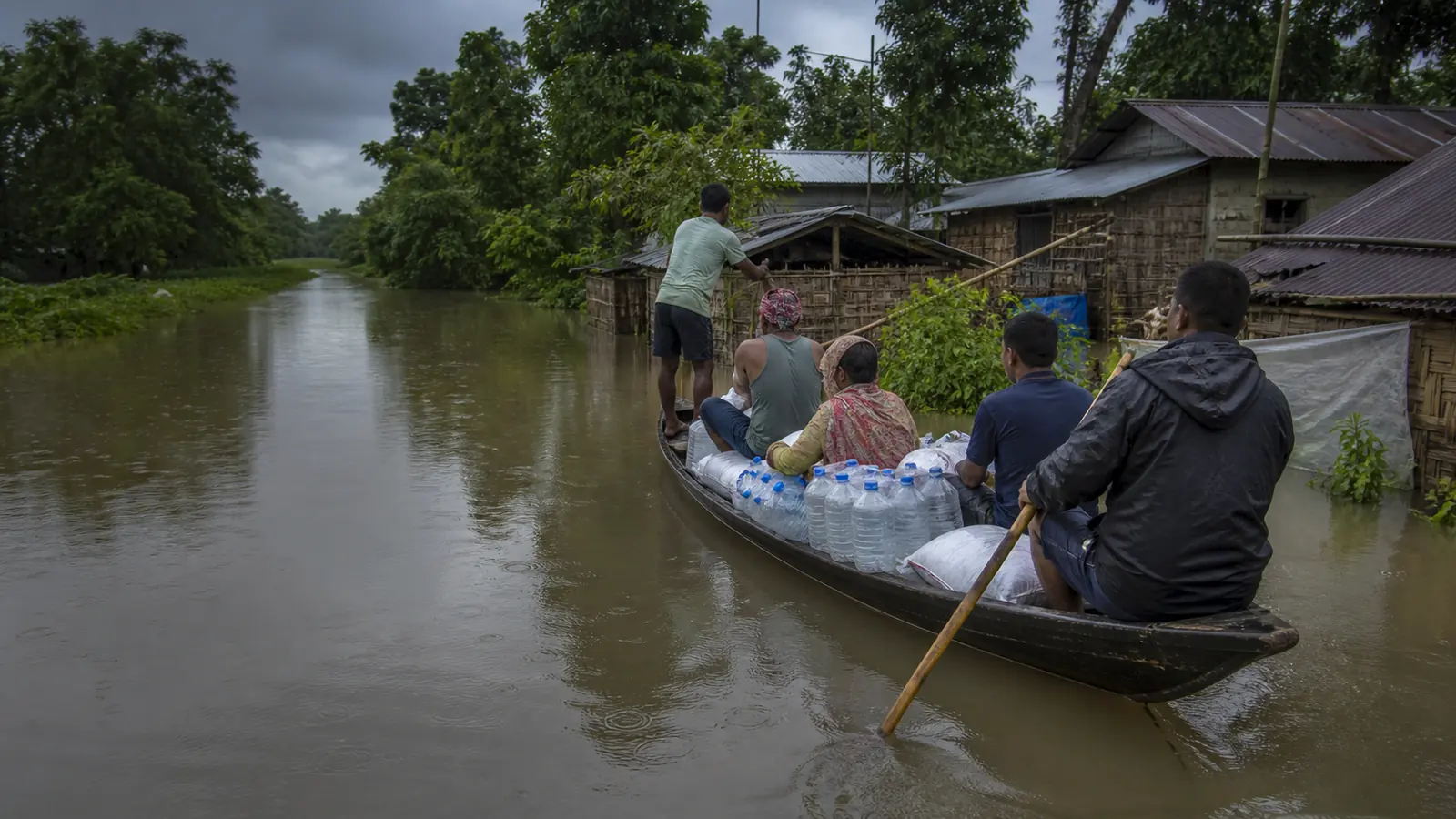
Assam floods leave 49,000 people in relief centres as recovery begins
More than 700,000 people were displaced during Assam's flood emergency, with at least 49,000 still housed in 125 relief camps and distribution centres on 10 August.
Water has receded in some areas, but tens of thousands of people still need relief locations and several rivers remain above danger levels.
Latest updatesRelief and recovery continue after widespread displacement
Assam's flood emergency remained critical on 10 August even as some residents began returning home. Assam State Disaster Management Authority information cited in credible reporting put the cumulative death toll at 100 and said more than 700,000 people had been displaced during the floods.
At least 49,000 flood-affected residents remained housed in 125 relief camps and relief distribution centres. Several rivers were still above danger levels, leaving vulnerable communities exposed to further flooding if heavy rain or upstream flows increased.
The Brahmaputra and other rivers flooded villages, damaged roads and local infrastructure, submerged farmland and swept away homes and livestock. Nearly 300,000 people had been forced into government-run camps at the height of the emergency.
As water recedes, families are returning to homes and fields covered by deep silt. Losses of cattle, crops, household goods and income are extending the humanitarian impact beyond the immediate evacuation period.
Assam state officials said damage assessments and relief monitoring were continuing. Around 50,000 affected people had received interim monetary compensation by 10 August, while authorities worked to assess rehabilitation needs.
Returning families face damaged homes and disrupted livelihoods
The latest needs combine continuing emergency relief with early recovery. Receding water can expose contamination, unstable structures, deep silt and the full scale of losses to homes, crops and livestock.
Shelter and household needs
People whose homes were destroyed or remain unsafe need temporary shelter, roofing materials, bedding, clothing, kitchen equipment and support to rebuild basic living conditions.
Water, sanitation and health
Floodwater can contaminate wells and other drinking sources. Clean water, hygiene supplies, safe sanitation, medical care and disease monitoring remain important as residents return.
Livelihood recovery
Flooded farmland and losses of cattle, stored food and tools can remove a household's income and food supply long after water levels fall.
Access and information
Damaged roads, bridges and embankments can delay assessments and deliveries. Reliable local information is essential where river levels remain dangerous or communities are hard to reach.
How the emergency has developed
Public appeal records continued support
The Assam Foundation of North America reports that its flood appeal has received support from 508 donors. Field distribution and rehabilitation planning remain active.
State information records 100 deaths
Assam State Disaster Management Authority information cited in credible reporting puts the cumulative flood death toll at 100. At least 49,000 people remain at 125 relief camps and distribution centres, and several rivers remain above danger levels.
Relief distribution moves into rehabilitation
The Assam Foundation of North America says distribution is continuing in interior areas. A new phase starts to prepare rehabilitation kits for 250 families in Sivasagar district through local partners, including the Assam branch of the Indian Red Cross Society.
Local assessment highlights impact on children
Bal Raksha Bharat cites Sphere India data showing more than 178,000 people affected in seven districts and 349 villages, including 27,345 children. The update records 267 homes completely damaged and more than 11,489 people in camps.
Major flood wave displaces more than 700,000 people
It is reported that heavy monsoon rain and overflowing rivers have displaced more than 700,000 people. Nearly 300,000 people are forced into government-run relief camps at the height of the emergency.
Flash floods and landslides begin
Bal Raksha Bharat dates the start of this phase of flash flooding and landslides to 28 June, after sustained monsoon rain affected communities in Assam.
Relief must continue while rehabilitation needs are assessed
The scale of recovery will become clearer as more residents return, damage records are reconciled and officials reach communities where access remains difficult.
Monitoring river levels
Communities near rivers above danger levels remain vulnerable. Local warnings and evacuation advice will continue to guide immediate safety decisions.
Supporting displaced families
Relief camps and distribution centres still need safe water, food, sanitation, medical support and protection services while residents cannot return safely.
Assessing damage
Officials will continue recording losses to homes, roads, farmland, livestock and public infrastructure so rehabilitation assistance can be planned.
Restoring livelihoods
Recovery will depend on more than repairing buildings. Families may need help replacing animals, tools, household goods and income lost during the floods.
Information used in this report
Assam State Disaster Management Authority; Assam state officials; Press Information Bureau, Government of India; Bal Raksha Bharat; Sphere India; Assam Foundation of North America; the Assam branch of the Indian Red Cross Society; and credible reporting.