
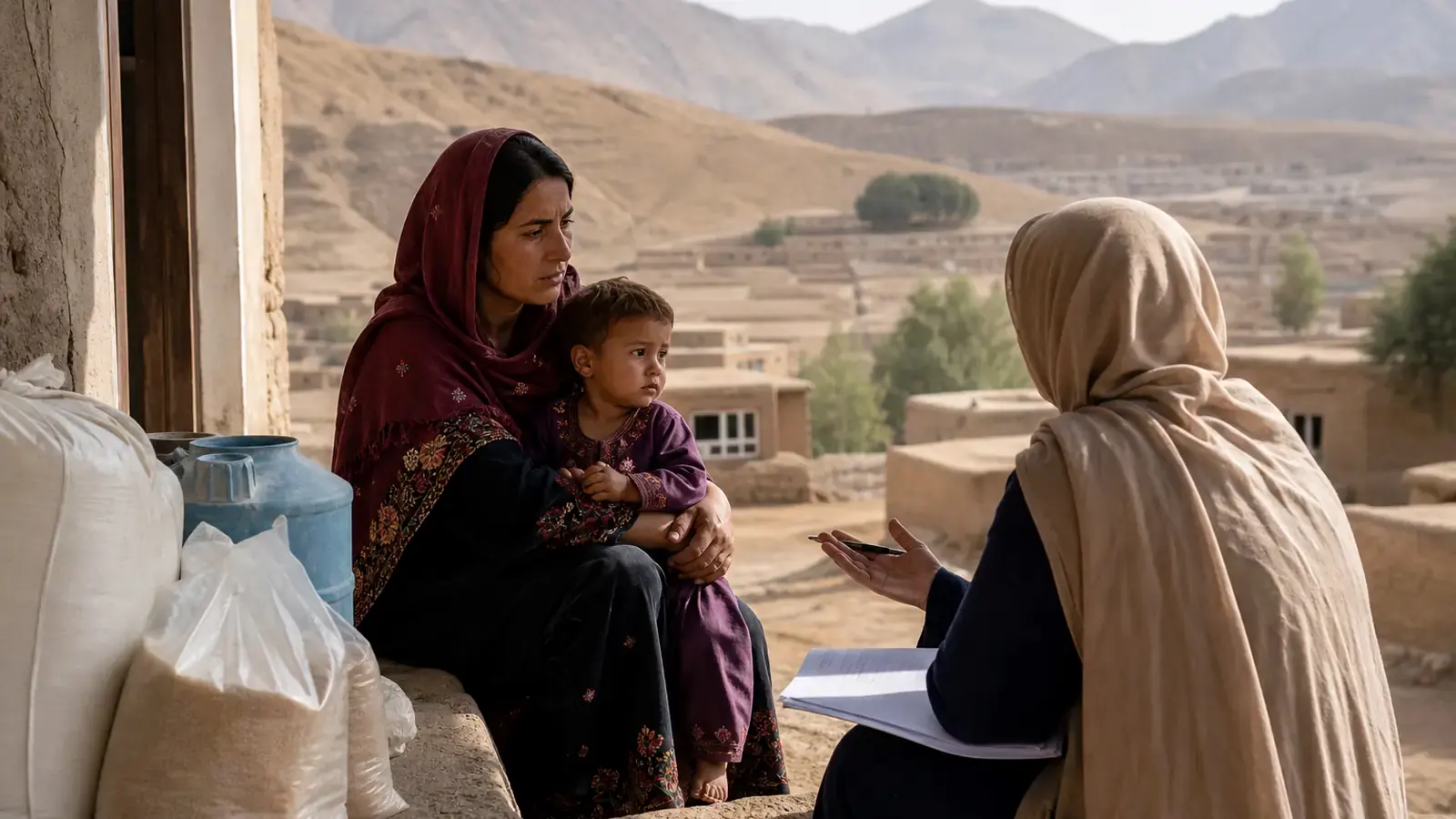
Afghanistan child malnutrition deepens as nutrition services are cut
Afghanistan's hunger emergency is worsening as 17.4 million people need urgent food assistance and 4.9 million women and children may need malnutrition treatment in 2026.
Peak wasting season is colliding with drought, displacement and severe funding cuts.
Crisis timelineNutrition services are shrinking as child hunger rises
The World Food Programme reports that 17.4 million people in Afghanistan need urgent food assistance and that 4.9 million women and children are expected to need malnutrition treatment during 2026.
World Food Programme and United Nations humanitarian officials warned on 4 August that child deaths were rising as funding shortages forced some nutrition services and preventive food distributions to stop in the worst-affected areas.
Twelve provinces had reached critical acute child-malnutrition levels. UNICEF separately reported that wasting had worsened across 26 of Afghanistan's 34 provinces compared with 2025.
Drought, mass returns, displacement, economic hardship and reduced humanitarian funding are combining to increase need while limiting the response.
Families face a narrowing path to food and treatment
The emergency affects food access, maternal and child health, safe water and the ability of overstretched services to identify and treat malnutrition.
Nutrition treatment
Clinics need trained staff, therapeutic food, medicines and reliable referral routes so children can receive care before their condition becomes critical.
Food security
Families facing lost crops and low incomes are cutting meals and reducing dietary quality, increasing the risk of acute malnutrition.
Women and young children
Children under two make up most severe and moderate acute malnutrition cases recorded in UNICEF's July assessment.
Funding pressure
Reduced funding is limiting prevention, treatment and food support during the period of highest seasonal need.
How the nutrition emergency has intensified
Nutrition services are cut during peak wasting season
World Food Programme and United Nations humanitarian officials warn that child deaths are rising as funding shortages suspend services and preventive food distributions in some of the worst-affected areas.
UNICEF records worsening wasting across most provinces
UNICEF says 3.7 million children under five face heightened malnutrition risk and wasting has worsened in 26 of 34 provinces compared with 2025.
Drought and shrinking aid deepen hunger
The World Food Programme documents families cutting meals while overstretched clinics struggle to meet rising demand.
UNICEF sets out its 2026 humanitarian response
UNICEF estimates that 21.9 million people, including 11.6 million children, will need humanitarian assistance during 2026.
The response depends on restoring access to nutrition support
Humanitarian agencies will continue tracking seasonal wasting, service closures and the ability to reach families in the provinces with the highest acute-malnutrition levels.
Maintain treatment
Keeping nutrition sites supplied and staffed is critical to preventing avoidable deterioration and deaths.
Protect prevention services
Food distributions, screening and community referrals help reach children before severe malnutrition develops.
Reach returning families
Large-scale returns and displacement are increasing pressure on communities that already have limited services.
Track the seasonal peak
Figures and access conditions may change as agencies update assessments through the peak wasting period.
Information used in this report
World Food Programme; United Nations humanitarian officials; UNICEF Afghanistan; and UNICEF Humanitarian Action for Children.