
people in emergency hunger
Nearly 400,000 people across Sheikan, Bara and Gharb Bara districts are already experiencing IPC Phase 4 acute food insecurity.
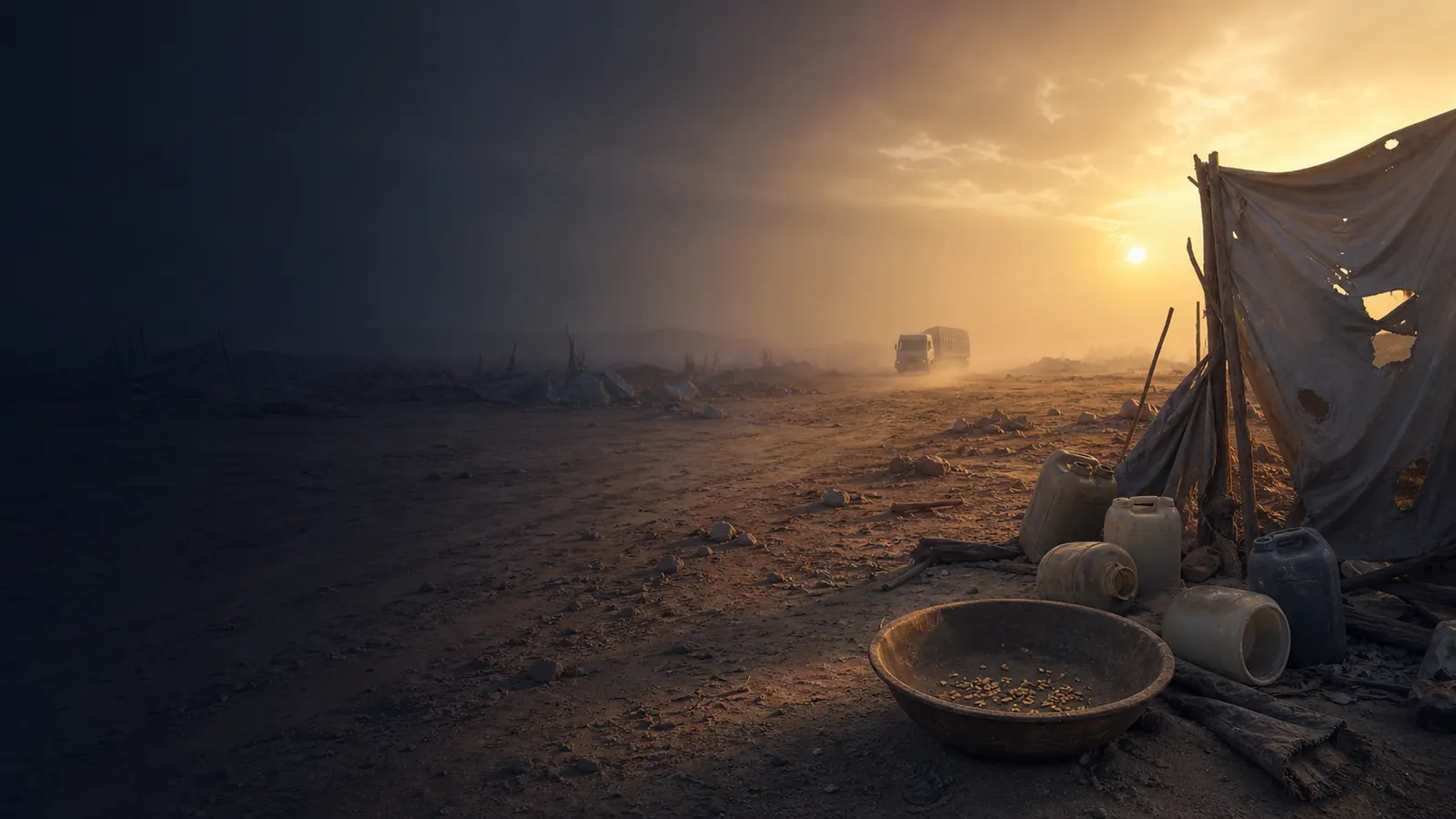
Hunger and displacement are accelerating
Families fleeing violence are arriving every day. Camps are beyond capacity, essential supplies are scarce, and life-saving nutrition stocks could begin running out in August.
The emergency in numbers
These figures come from the World Food Programme’s 17 July 2026 update for El Obeid and nearby districts. They are presented with dates and named sources so donors can understand the evidence.
Nearly 400,000 people across Sheikan, Bara and Gharb Bara districts are already experiencing IPC Phase 4 acute food insecurity.
WFP estimates that active conflict prevented assistance from reaching 200,000 people in Sudan during June alone.
Specialised food for preventing and treating malnutrition is expected to begin running out without new funding and access.
Why help now
El Obeid is receiving families displaced from across Kordofan and as far away as Darfur. WFP says the arrivals may have doubled the city’s population, while food, fuel and water supplies are scarce and humanitarian movement is constrained by clashes, drone strikes and insecurity.
ICRC and Sudan Red Crescent teams reported providing a month’s worth of food to more than 42,000 people in Al Obeid and described rising needs after the escalation of hostilities. UNICEF has warned that children across Sudan are bearing a growing toll and called the situation around El Obeid particularly alarming.
Read the Aid News report on the El Obeid hunger crisis for the event-level hunger, displacement and response record.
Act while support can still move
Help fund AidWorkers.com's verified crisis information, response readiness and authorised emergency support where it can be delivered responsibly.
Secure payments are processed by Donorbox. This is an independent AidWorkers.com campaign.
Trouble seeing the secure form? Open the Donorbox donation page.
Crisis timeline
Verified events are kept in reverse chronological order. Older entries remain visible so changes in the emergency can be followed over time.
BBC Verify reported that hundreds of tents appeared between 24 March and 19 July. An unnamed Islamic Relief humanitarian official told BBC Verify that roughly 80 to 100 households were still arriving each day. These are secondary observations, not a new UN displacement count.
Source: BBC Verify
UN Women described attacks near water sources and estimated about 500,000 civilians in El Obeid, including 83,000 internally displaced people. UNFPA separately recorded 21 drone-related incidents in North Kordofan from 1 to 19 July.
Sources: UN Geneva briefing and UNFPA flash update
WFP said people across Sheikan, Bara and Gharb Bara districts were experiencing IPC Phase 4 acute food insecurity. WFP was assisting just over 100,000 people in El Obeid at half rations.
Source: World Food Programme
Save the Children said 11,000 people had been displaced around El Obeid in the preceding two weeks, including more than 5,500 children.
Source: Save the Children
ICRC and Sudan Red Crescent teams distributed food in Al Obeid. ICRC also said the city’s teaching hospital had treated more than 850 weapon-wounded patients since the start of 2026.
Source: International Committee of the Red Cross
IPC estimated that nearly 19.5 million people across the areas analysed faced Crisis-level hunger or worse. Its famine-risk areas were outside North Kordofan, so this does not establish famine in El Obeid.
Source: Integrated Food Security Phase Classification
Donation transparency
Urgency should never come at the expense of honesty. This page separates verified crisis facts from AidWorkers.com’s own role.
Check the evidence
The crisis wording and figures were checked against reputable humanitarian sources before publication and during each dated update.
No. This is an independent AidWorkers.com campaign. Those organisations are cited only as sources for the humanitarian facts and are not presented as partners or recipients.
No such claim is made. The campaign supports AidWorkers.com’s Sudan-related humanitarian purposes, including verified public information, practical resources, response readiness and authorised direct or partner support where feasible. Any confirmed transfer or delivery should be reported separately and transparently.
Conflict, access and displacement change quickly. The figures on this page are dated, attributed to their named source, and should be reviewed whenever the appeal is materially updated.
First published: . Last fact-checked: .