Aid Workers, Humanitarian Aid Support
Mindanao earthquake appeal · Published 8 August 2026 · Updated 11 August 2026
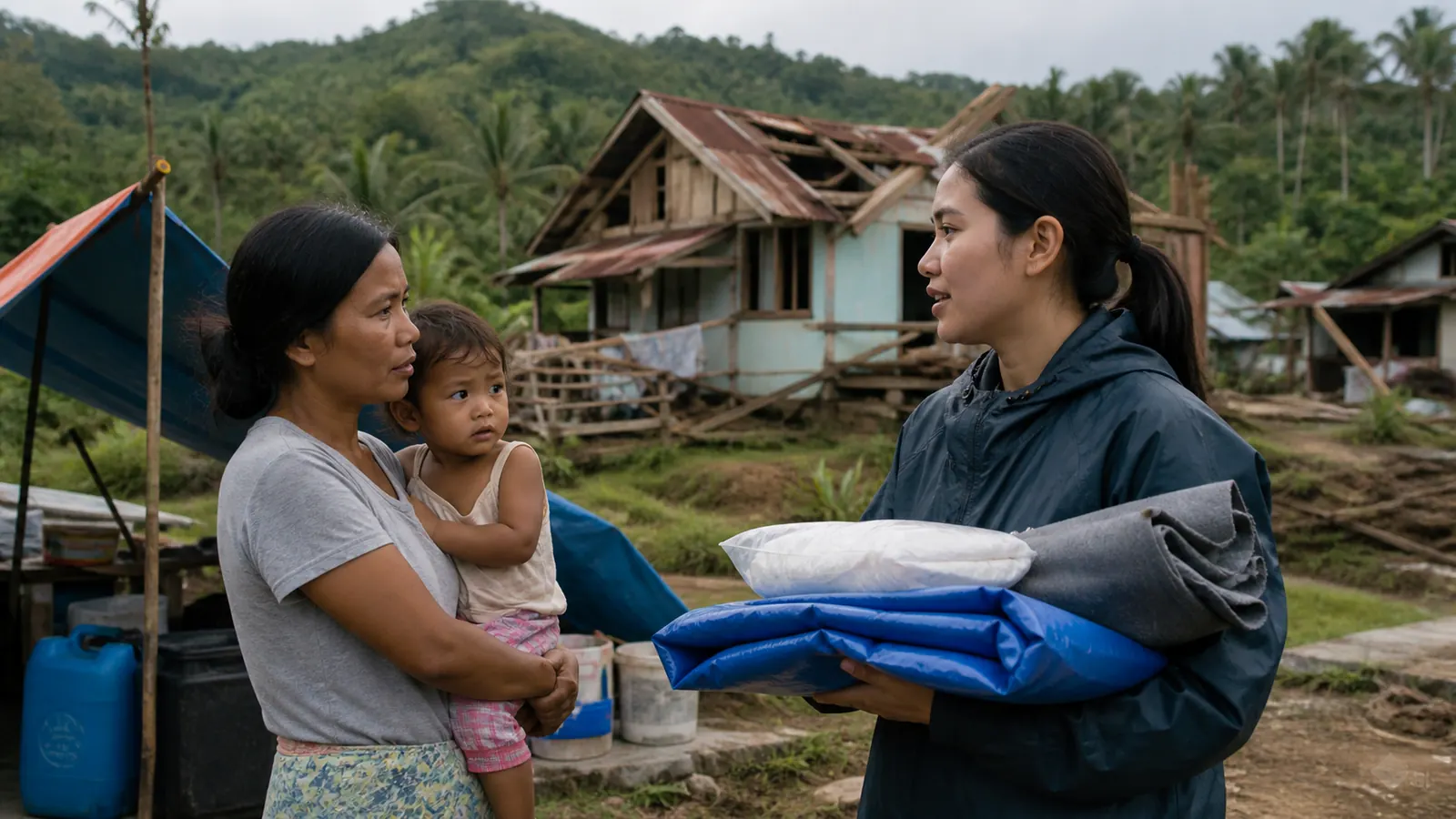
A mother holding a young child while speaking with a relief worker near damaged homes

Help families recover safely

Families displaced by the Mindanao earthquake still need safe shelter and support.

A magnitude 7.8 earthquake struck offshore Sarangani on 8 June. Government data recorded more than 1.65 million people affected and 92,628 people still displaced as of 8 July.

  • 92,628 people remained displaced
  • 121,307 homes were damaged
  • 19,188 homes were destroyed
  • A dedicated UNHCR appeal remains active

Crisis timeline

How the earthquake and response have developed

Verified events are kept in reverse chronological order. Older entries remain visible as displacement and recovery continue.

  1. More than 92,000 people remain displaced

    The Department of Social Welfare and Development recorded 1,655,313 people affected across 650 barangays. It reported 92,628 displaced people, including 28,462 in 74 evacuation centres and 64,166 staying elsewhere. Officials recorded 121,307 damaged homes, including 19,188 destroyed and 102,119 partially damaged.

    Source: Department of Social Welfare and Development DROMIC, Report 56

  2. United Nations response reaches the most affected areas

    The United Nations in the Philippines reported that nearly 1.7 million people had been affected. As of 30 June, 81 deaths, more than 1,300 injuries, 31 missing people and around 90,000 displaced people had been recorded. More than 11,100 aftershocks had been detected while agencies delivered food, medical care and other assistance.

    Source: United Nations in the Philippines

  3. Assessments identify continuing secondary hazards

    DOST-PHIVOLCS field teams assessed earthquake impacts and warned that landslides, liquefaction and structurally damaged buildings could create further risks. Teams worked with local authorities to document ground effects and support safer recovery decisions.

    Source: DOST-PHIVOLCS

  4. Magnitude 7.8 earthquake strikes offshore Sarangani

    DOST-PHIVOLCS recorded a magnitude 7.8 earthquake about 32 kilometres west of Maasim, Sarangani, at a depth of 33 kilometres. A tsunami warning was issued and emergency response began across affected parts of Mindanao.

    Sources: DOST-PHIVOLCS and AHA Centre

Verified emergency facts

Displacement and housing damage remain severe

These government figures were current at 06:00 PST on 8 July 2026 and were checked again on 8 August. Assessments can change as recovery continues.

92,628

people remained displaced

More than 28,000 people were still in evacuation centres and over 64,000 were staying elsewhere.

121,307

homes were damaged

The official total included both destroyed and partially damaged homes.

19,188

homes were destroyed

Families who lost homes continue to face shelter, protection and recovery needs.

Why help matters now

Recovery will take sustained support

Thousands of families remain away from home while communities repair damaged housing and essential services. UNHCR says displaced families continue to need safe shelter, basic services, health care, water, sanitation and protection.

UNHCR maintains a dedicated public appeal for the Mindanao earthquake response. That appeal confirms a legitimate and continuing call for public support.

This AidWorkers.com campaign is independent. Cited organisations are evidence sources and are not presented as partners or recipients of donations to AidWorkers.com.

Read the Aid News report on the Mindanao earthquake for the event-level impact, response and recovery record.

The situation can change. This page will keep dated updates without removing earlier verified snapshots.
  • Safe temporary shelter and repairs to damaged homes
  • Clean water, sanitation and essential household supplies
  • Health care and protection for displaced families
  • Reliable public information as recovery needs change
  • Responsible support where it can be properly authorised

Donation transparency

What this campaign does and does not promise

Urgency should never come at the expense of honesty. This page separates verified humanitarian facts from AidWorkers.com's own role.

Your donation can support

  • Monitoring and publishing verified earthquake information.
  • Practical crisis, preparedness and field-focused resources.
  • Due diligence, coordination and response-readiness work.
  • Authorised direct or partner support connected to the emergency where feasible and properly controlled.

What we will not imply

  • That AidWorkers.com is part of UNHCR, the United Nations or the Philippine government.
  • That a gift has reached Mindanao or a named organisation unless that transfer is confirmed.
  • That fast-changing impact and displacement figures remain unchanged.

Check the evidence

Sources used for this appeal

Impact, response needs and active public fundraising were checked before publication. Fast-moving claims are dated and attributed in plain text.

  • Department of Social Welfare and Development DROMIC, Report 56Affected population, displacement, evacuation centres, housing damage and government assistance · 8 July 2026
  • DOST-PHIVOLCSMainshock location, depth, magnitude, continuing hazards and impact assessment · checked 8 August 2026
  • United Nations in the PhilippinesCasualties, aftershocks, displacement and coordinated response · 2 July 2026
  • UNHCR PhilippinesContinuing displacement, recovery needs and active Mindanao earthquake appeal · checked 8 August 2026
  • AHA CentreInitial regional emergency situation and tsunami warning context · 8 June 2026
Is this a UNHCR or United Nations appeal?

No. This is an independent AidWorkers.com campaign. The organisations above are cited only as evidence sources and examples of active public fundraising. They are not presented as partners or recipients.

Will every donation be sent directly to Mindanao?

No such claim is made. The campaign supports AidWorkers.com's earthquake-related humanitarian purposes, including verified public information, practical resources, response readiness and authorised direct or partner support where feasible. Any confirmed transfer or delivery should be reported separately and transparently.

Why can the figures change?

Assessments, displacement and recovery needs continue to change. Figures on this page are dated so later updates can be added without erasing the historical record.

First published: . Last fact-checked: .