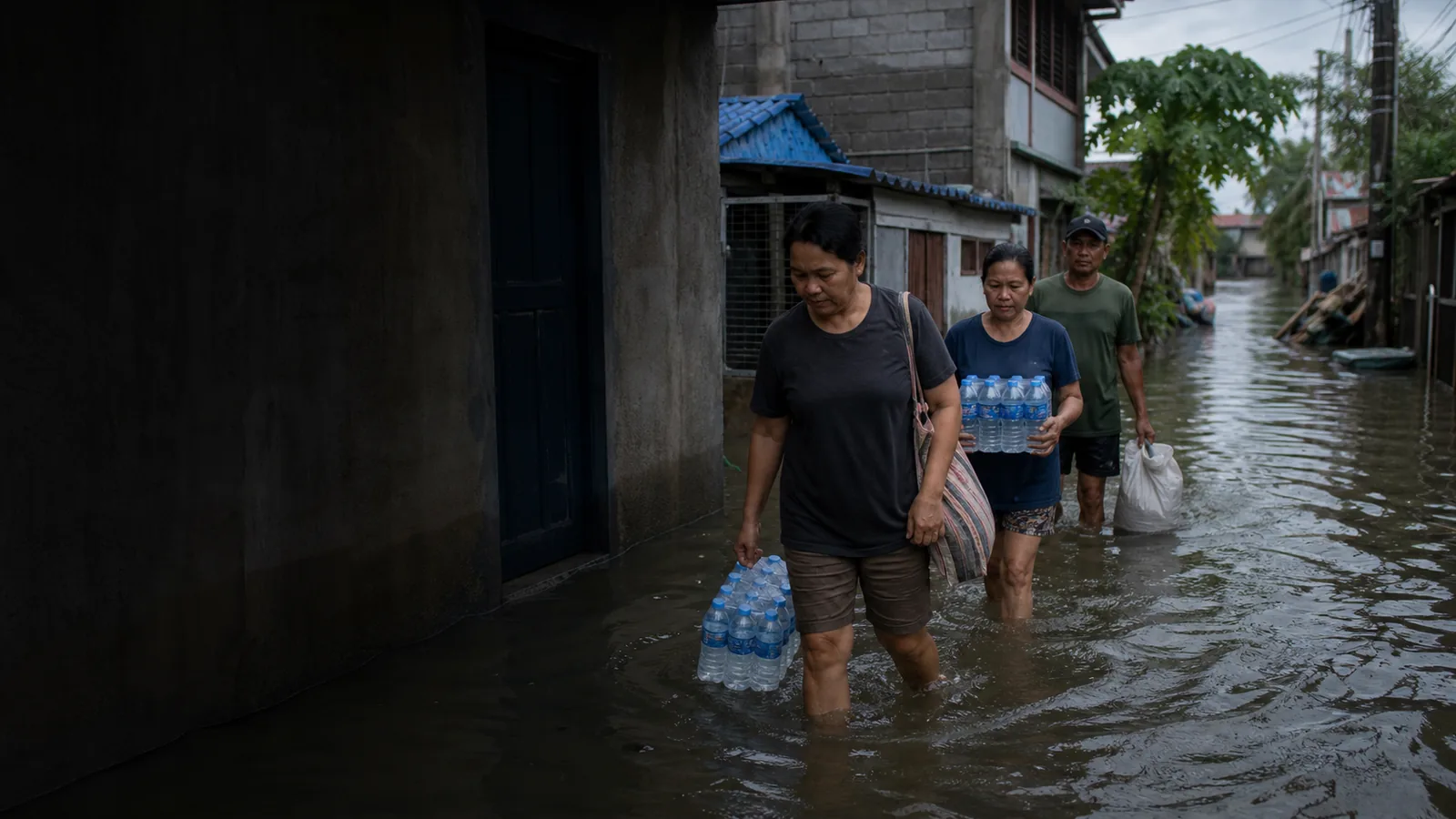
Nearly 100,000 people remain displaced
The latest government report records 3.73 million people affected and 98,074 still displaced. More than half are staying in evacuation centres.
Source: DSWD DROMIC
Stand with flood-affected families
Monsoon rains and Tropical Cyclones Luis and Maymay affected 3.73 million people across ten regions, damaging homes and forcing families into evacuation centres or host households.
Support responsible humanitarian action
Help fund AidWorkers.com's verified crisis information, practical humanitarian resources, response readiness and authorised emergency support where it can be delivered responsibly.
Secure payments are processed by Donorbox. This is an independent AidWorkers.com campaign.
Trouble seeing the secure form? Open the Donorbox donation page.
Crisis timeline
For the full humanitarian picture and latest qualified figures, read our Philippines monsoon flood news report.
The latest government report records 3.73 million people affected and 98,074 still displaced. More than half are staying in evacuation centres.
Source: DSWD DROMIC
Flooding and strong winds affect Western Visayas and Metro Manila, with a tornado also reported in Iloilo.
Sources: DSWD DROMIC and DOST-PAGASA
Tropical Cyclone Maymay makes landfall near Magsingal in Ilocos Sur before weakening the following day.
Source: DOST-PAGASA
Tropical Depression Luis develops on 1 August and weakens on 3 August after bringing rain, floods and rough seas.
Source: DOST-PAGASA
Heavy rain associated with a low-pressure area causes the first flooding included in the government's consolidated event record.
Source: DSWD DROMIC
Verified emergency facts
These figures come from the Philippine government's consolidated report as of 6pm local time on 12 August. Assessments are continuing.
Across evacuation centres and host households.
Including 103 reported destroyed.
Government-recorded humanitarian assistance by 12 August.
Why help matters now
People in evacuation centres need safe shelter, clean water, food, healthcare, accessible sanitation and protection services. Those staying with relatives or outside formal sites can be less visible to registration and assistance systems.
As water recedes, households may face damaged homes, contaminated supplies, lost possessions and interrupted livelihoods. Safe returns depend on reliable information and functioning roads, utilities and local services.
This AidWorkers.com campaign is independent. Cited organisations are evidence sources and are not presented as partners or recipients of donations to AidWorkers.com.
Donation transparency
Urgency should never come at the expense of honesty. This page separates verified humanitarian evidence from AidWorkers.com's own role.
Check the evidence
Fast-changing figures are dated and qualified. Casualty figures remain provisional while the national disaster council validates local reports.
No. This is an independent AidWorkers.com campaign. The organisations named above are evidence sources and are not presented as partners or recipients.
No such claim is made. The campaign supports AidWorkers.com's flood-related humanitarian purposes, including verified public information, practical resources, response readiness and authorised direct or partner support where feasible. Any confirmed transfer or delivery should be reported separately and transparently.
People move between evacuation centres, host households and their homes, while local damage and casualty records are still being checked. New official reports can therefore revise the totals.
First published and last fact-checked: .