Aid Workers, Humanitarian Aid Support
Eastern DRC Ebola appeal · Published 29 July 2026 · Updated 11 August 2026
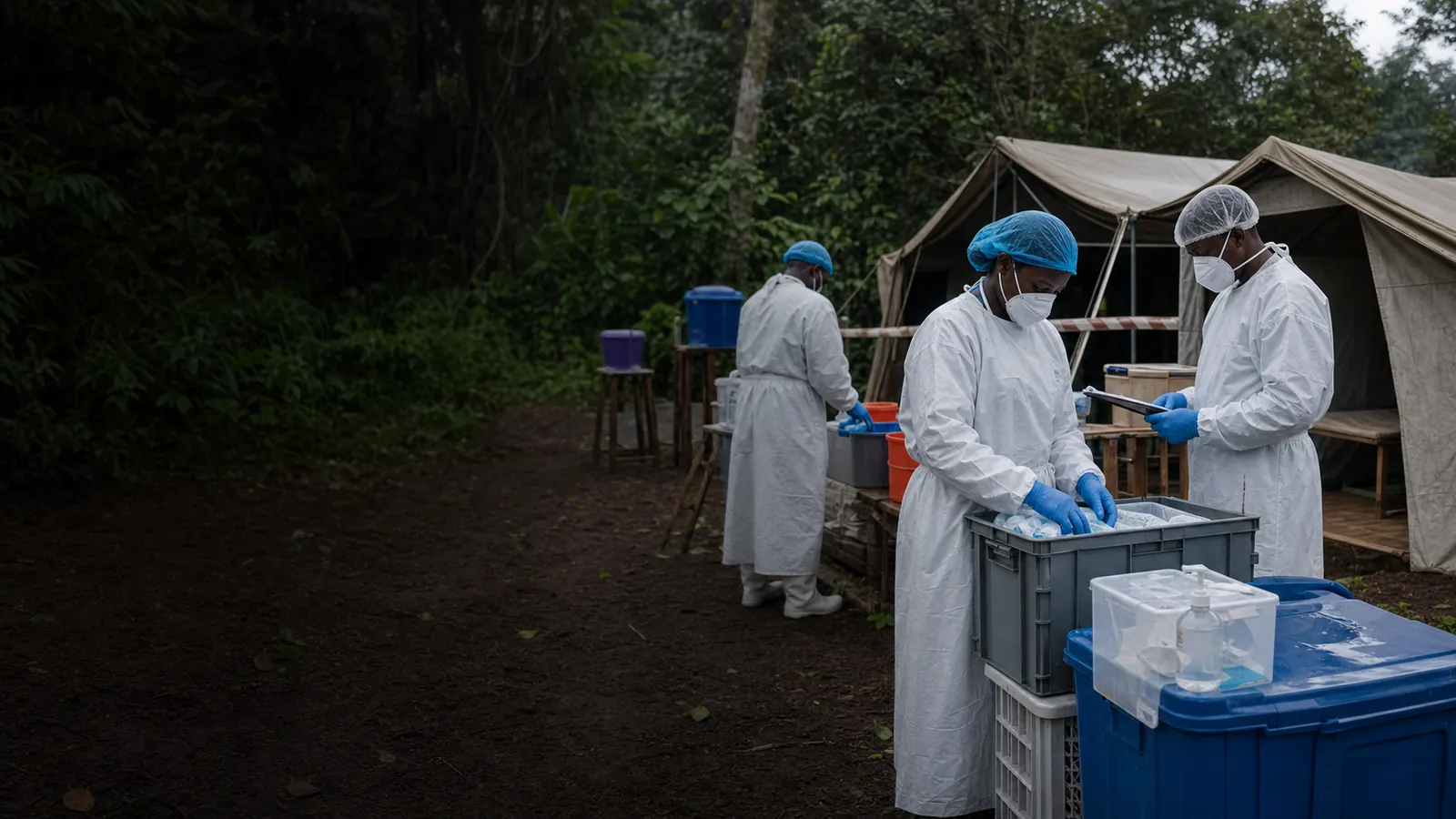
Health workers preparing supplies for an Ebola response

A public health emergency in a conflict-affected region

Eastern DRC needs sustained action against Ebola.

WHO's daily update published on 10 August reported 4,209 confirmed cases and 1,916 confirmed deaths in the DRC as of 7 August. WHO has described this as the largest Ebola outbreak ever recorded in the country.

  • 4,209 confirmed cases as of 7 August
  • 1,916 confirmed deaths as of 7 August
  • 49 health zones in five provinces
  • Largest DRC Ebola outbreak recorded

Crisis timeline

How the outbreak and response have developed

Verified events are kept in reverse chronological order. Older entries remain visible so the emergency can be followed over time.

For a fuller report, read our eastern DRC Ebola news report.

  1. WHO expands community evidence work in the Ebola response

    The World Health Organization said it had received a US$3 million grant from Wellcome to strengthen community evidence alongside epidemiological, clinical and laboratory data. WHO said the work would expand rapid community assessments and had already identified practical priorities including stronger community surveillance, better access to toll-free hotlines, psychosocial support for frontline health workers, more timely communication of laboratory results, shorter ambulance delays and increased reception capacity at treatment centres.

    Source: World Health Organization

  2. WHO daily update records 4,209 confirmed cases and 1,916 deaths

    The World Health Organization's daily epidemiological update, published on 10 August using DRC data as of 7 August, reported 4,209 confirmed cases and 1,916 confirmed deaths. The confirmed-case fatality ratio remained 46 percent. WHO also reported 828 recoveries and 198 suspected cases in the DRC.

    Source: World Health Organization daily epidemiological update

  3. WHO daily update records 4,120 confirmed cases and 1,887 deaths

    The World Health Organization's daily epidemiological update, published on 9 August using DRC data as of 6 August, reported 4,120 confirmed cases and 1,887 confirmed deaths. The confirmed-case fatality ratio was 46 percent. WHO also reported 810 recoveries in the DRC.

    Source: World Health Organization daily epidemiological update

  4. WHO daily update records 4,053 confirmed cases and 1,850 deaths

    WHO's daily epidemiological update, published on 7 August using DRC data as of 5 August, reported 4,053 confirmed cases and 1,850 confirmed deaths. The confirmed-case fatality ratio was 46 percent. WHO also reported 793 recoveries in the DRC.

    Source: World Health Organization daily epidemiological update

  5. WHO daily update records 3,973 confirmed cases and 1,801 deaths

    WHO's daily epidemiological update, published on 6 August using DRC data as of 4 August, reported 3,973 confirmed cases and 1,801 confirmed deaths. The confirmed-case fatality ratio was 45 percent. WHO also reported 776 recoveries and 270 suspected cases in the DRC.

    Source: World Health Organization daily epidemiological update

  6. WHO daily update records further increases in cases and deaths

    WHO’s daily epidemiological update, using DRC data as of 1 August, reported 3,748 confirmed cases and 1,657 confirmed deaths. The confirmed-case fatality ratio remained 44 percent. WHO also reported 708 recoveries and 227 suspected cases in the DRC.

    Source: World Health Organization daily epidemiological update

  7. WHO reports the largest Ebola outbreak ever recorded in the DRC

    WHO reported 3,605 confirmed cases and 1,587 deaths through 30 July, a crude case fatality ratio of 44 percent. Cases had reached 49 health zones across five provinces, with 33 zones active during the preceding seven days. WHO recorded 641 cases and 282 deaths in the latest seven-day period and said a substantial response scale-up was needed.

    Source: World Health Organization Disease Outbreak News

  8. WHO expands infection prevention across health facilities

    WHO said its infection prevention and control teams had supported more than 900 health facilities and trained more than 1,000 health workers. The work includes Kigonze, where tens of thousands of people displaced by conflict face added health risks from crowded living conditions and limited clean water, hygiene and other basic services.

    Source: WHO Regional Office for Africa

  9. WFP reports expanded food and logistics support

    World Food Program USA reported that WFP had expanded support across 48 health zones, including food assistance and humanitarian flights, and needed US$101 million for six months of regional Ebola support. This historical update is retained as an attributed response snapshot.

    Source: World Food Program USA

  10. DRC totals reported at 3,262 cases and 1,437 deaths

    DRC Ministry of Health data available at the time recorded 3,262 confirmed cases and 1,437 deaths. These figures are retained as a dated snapshot. WHO's most recent detailed primary table available to that review covered data through 15 July.

    Source: DRC Ministry of Health surveillance portal

  11. Uganda declares its linked outbreak over

    Uganda's Ministry of Health reported 20 confirmed cases, 18 recoveries and two deaths among confirmed cases, with no current admissions or active contacts. This milestone applies to Uganda. The DRC outbreak remains active.

    Source: Uganda Ministry of Health

  12. WHO says more than 1,000 lives have been lost

    WHO said more than 1,000 people had died in the DRC outbreak and warned that the response could slow without sustained financing.

    Source: WHO Regional Office for Africa

  13. WHO warns of sustained transmission and geographic expansion

    WHO reported intensifying transmission, increasing mortality and continuing spread. It described the emergency as the largest outbreak caused by Bundibugyo virus on record and assessed regional spread risk along major mobility corridors as high.

    Source: WHO situation report 11

  14. WHO reports cases in five provinces and 46 health zones

    WHO's data as of 15 July recorded 2,124 confirmed DRC cases and 828 deaths. Thirty-eight of 46 affected health zones were active, and Ituri accounted for almost nine in every ten confirmed cases. WHO cautioned that reported increases could include testing and reporting backlogs.

    Source: WHO Disease Outbreak News

  15. WFP says food and logistics support reaches 1.2 million people

    WFP said its food, nutrition, logistics, telecommunications and air services were supporting more than 1.2 million people in eastern DRC. It required US$72 million over six months to sustain the Ebola response.

    Source: World Food Programme

  16. WHO lists the first molecular diagnostic test for the virus

    WHO added the first molecular diagnostic test for Bundibugyo virus to its Emergency Use Listing, intended to support faster access to quality-assured testing and earlier case confirmation.

    Source: World Health Organization

  17. WHO declares a public health emergency of international concern

    The declaration followed outbreak declarations by the DRC and Uganda on 15 May. WHO explicitly said the event did not meet its definition of a pandemic emergency.

    Source: World Health Organization

Primary-source outbreak facts

A rapidly expanding outbreak across a difficult operating environment

The latest case totals come from WHO's daily update published on 10 August using DRC data as of 7 August. Geographic details come from WHO's Disease Outbreak News update published on 1 August using data through 30 July.

4,209

confirmed DRC cases

WHO recorded 4,209 confirmed cases as of 7 August, 89 more than its daily update using data as of 6 August.

1,916

deaths in the DRC

WHO recorded 1,916 confirmed deaths as of 7 August, with the confirmed-case fatality ratio at 46 percent.

49

affected health zones

Cases were reported in 49 health zones across Ituri, North Kivu, South Kivu, Haut-Uele and Tshopo. Thirty-three zones had reported cases during the preceding seven days.

Why sustained help matters

The health emergency is colliding with conflict, hunger and displacement

WHO reported 151 confirmed infections and 44 deaths among health workers through 30 July. Conflict, insecurity, population movement and limited access to food, clean water, shelter and health care make surveillance and safe treatment harder.

WFP says 26.5 million people across the DRC face acute food insecurity and 7.8 million are internally displaced. Its eastern DRC response helps people remain in care or under observation while moving responders and supplies into hard-to-reach areas.

The IFRC has a CHF 29.5 million regional appeal supporting early detection, reliable health information, safe burials and public-health action. Oxfam also has an active DRC crisis appeal. These appeals independently demonstrate legitimate, urgent humanitarian funding needs.

The focus here is the active outbreak in the DRC. Uganda declared its linked outbreak over on 28 July, while the continuing DRC outbreak still creates an importation risk across the region.
  • Early detection, quality-assured testing and contact tracing
  • Safe care and infection prevention in health facilities
  • Safe and dignified burials
  • Trusted community health information
  • Food, logistics and secure access for the response

Donation transparency

What this campaign does and does not promise

Urgency should never come at the expense of honesty. This page separates verified outbreak facts from AidWorkers.com's own role.

Your donation can support

  • Monitoring and publishing verified eastern DRC Ebola information.
  • Practical crisis, preparedness and field-focused resources.
  • Due diligence, coordination and response-readiness work.
  • Authorised direct or partner support connected to the emergency where feasible and properly controlled.

What we will not imply

  • That AidWorkers.com is a health authority or is endorsed by any source named below.
  • That a gift has reached the DRC or a named organisation unless that transfer is confirmed.
  • That fast-moving case and death totals are permanent facts.

Check the evidence

Sources used for this appeal

Outbreak facts, operating risks and evidence of active public fundraising were checked before this update. The page keeps dates and source attributions beside fast-moving claims.

  • World Health OrganizationUS$3 million Wellcome grant and operational priorities for expanded community evidence work · published 11 August 2026
  • World Health OrganizationDaily epidemiological update with DRC cases, deaths, recoveries and suspected cases as of 7 August 2026 · published 10 August 2026
  • World Health OrganizationDaily epidemiological update with DRC cases, deaths and recoveries as of 6 August 2026 · published 9 August 2026
  • World Health OrganizationDaily epidemiological update with DRC cases, deaths and recoveries as of 5 August 2026 · published 7 August 2026
  • World Health OrganizationDaily epidemiological update with DRC cases, deaths, recoveries and suspected cases as of 4 August 2026 · published 6 August 2026
  • World Health OrganizationDaily epidemiological update with DRC cases, deaths, recoveries and suspected cases as of 1 August 2026 · published 3 August 2026
  • World Health OrganizationDisease Outbreak News with cases, deaths, affected areas and risk assessment through 30 July 2026 · published 1 August 2026
  • WHO Regional Office for AfricaInfection prevention support for health facilities and displaced communities · 30 July 2026
  • World Food Program USAFood, logistics and funding response update · 29 July 2026
  • DRC Ministry of HealthNational outbreak surveillance portal · accessed 29 July 2026
  • Uganda Ministry of HealthLinked Uganda outbreak declared over · 28 July 2026
  • WHO Regional Office for AfricaMore than 1,000 lives lost and response financing warning · 27 July 2026
  • WHO Regional Office for AfricaSituation report 11, data as of 26 July 2026
  • World Health OrganizationDetailed cases, deaths, affected areas and risk assessment · 17 July 2026
  • World Food ProgrammeFood, logistics and emergency funding update · 8 July 2026
  • World Food ProgrammeDRC hunger, displacement and emergency operations overview · accessed 29 July 2026
  • World Health OrganizationFirst molecular diagnostic test added to the Emergency Use Listing · 2 July 2026
  • World Health OrganizationPublic health emergency declaration · 17 May 2026
  • International Federation of Red Cross and Red Crescent SocietiesCHF 29.5 million regional Ebola emergency appeal
  • Oxfam GBDRC crisis appeal and Ebola response activity
Is this a WHO, government, IFRC, WFP or Oxfam appeal?

No. This is an independent AidWorkers.com campaign. The organisations above are cited only as sources for outbreak facts or evidence of active humanitarian fundraising. They are not presented as partners or recipients.

Will every donation be sent directly to the DRC?

No such claim is made. The campaign supports AidWorkers.com's Ebola-related humanitarian purposes, including verified public information, practical resources, response readiness and authorised direct or partner support where feasible. Any confirmed transfer or delivery should be reported separately and transparently.

Why do some dated figures differ?

Outbreak reporting is fast moving. Newly reported totals may include delayed laboratory results or backlogs as well as recently detected cases. Primary WHO totals and later attributed reports are clearly dated so readers can see the evidence available at each point.

First published: . Last fact-checked: .